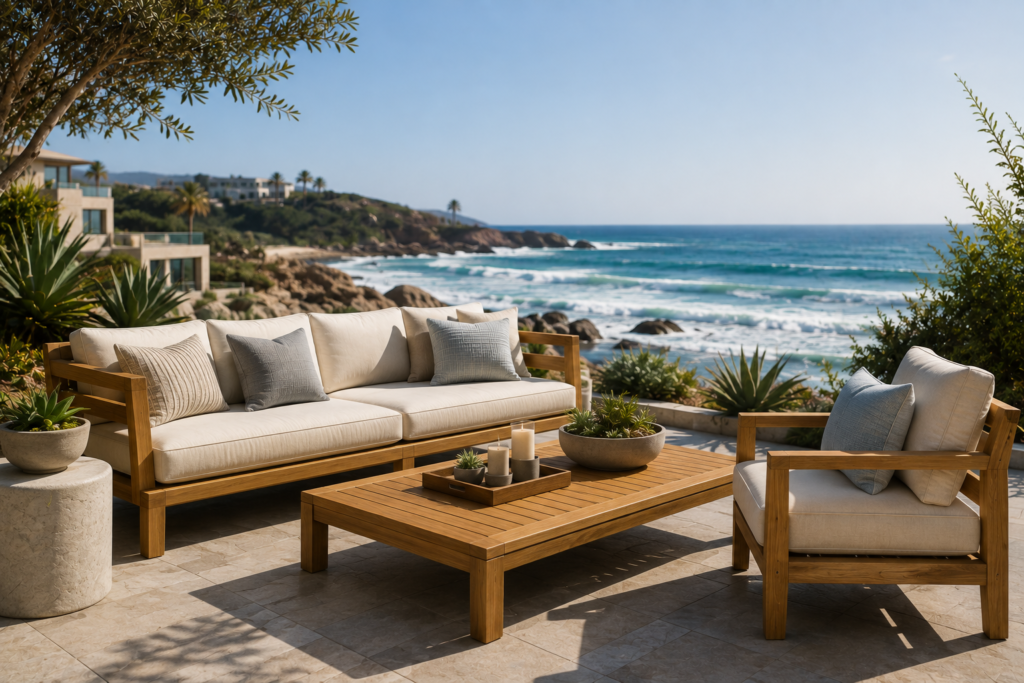
Outdoor furniture is expected to do something indoor furniture rarely has to do: remain beautiful while living continuously with sun, rain, humidity, wind, dust, salt air and temperature changes.
That makes material selection one of the most important decisions in an outdoor furniture project.
The question is not simply, “What is the best outdoor furniture material?”
A better question is:
What material is most appropriate for the environment where the furniture will actually be used?
A teak lounge chair beside the ocean faces very different conditions from an aluminum dining set installed on a dry desert terrace. A sofa used beneath a covered hotel veranda has different requirements from the same sofa placed beside an uncovered swimming pool.
Understanding these differences helps buyers specify furniture that performs better, requires less maintenance and maintains its appearance for longer.
Climate Should Come Before Material
Outdoor furniture is often selected first by appearance.
Design matters, of course. But for commercial, hospitality and residential projects, appearance should be considered together with environmental exposure.
Before selecting materials, buyers should understand five basic conditions:
- sunlight and UV exposure
- rainfall and humidity
- salt air
- temperature variation
- wind, dust and sand
These conditions influence not only the furniture frame, but also hardware, fabrics, foam, coatings and even construction details.
There is rarely one material that solves every outdoor problem.
The most durable outdoor furniture is usually the result of several materials working together correctly.
Coastal Environments: Salt Changes Everything
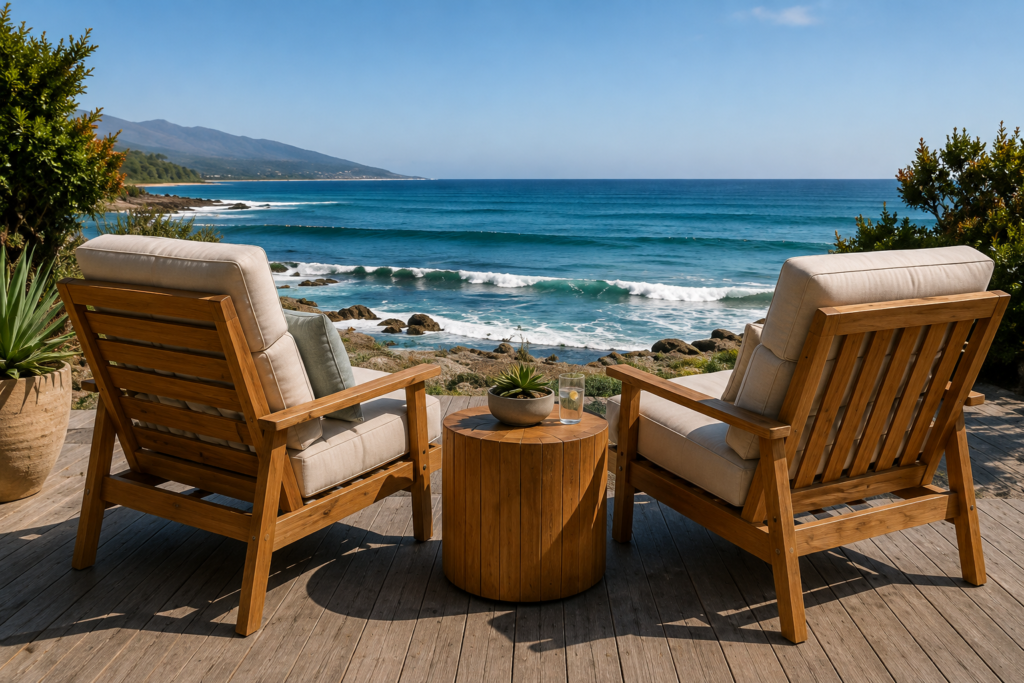
Coastal locations are among the most demanding environments for outdoor furniture.
Oceanfront hotels, beach clubs, villas and resorts are continuously exposed to moisture and airborne salt.
Salt can accelerate corrosion, particularly around joints, screws, welds and hidden hardware.
For these projects, material specifications should be more conservative than they would be for inland locations.
Teak
Teak remains one of the most reliable materials for coastal furniture.
Its natural oil content and dimensional stability make it particularly suitable for outdoor exposure.
When left untreated, teak gradually develops a silver-grey patina. This change is primarily visual and does not necessarily mean the timber is deteriorating.
Some projects prefer this naturally aged appearance.
Others maintain the original warm tone through periodic cleaning and teak treatments.
The important point is that teak should be properly dried and manufactured before furniture production.
Good timber does not compensate for poor construction.
Aluminum
Powder-coated aluminum is another strong option for coastal furniture because aluminum does not rust in the same way as ordinary steel.
However, coating quality still matters.
Edges, welds, drainage points and areas beneath hardware should all be properly finished.
Once the coating is damaged, oxidation can begin beneath the surface and affect appearance over time.
For high-salt environments, furniture design should also avoid unnecessary places where water can remain trapped.
Stainless Steel Hardware
Hardware is sometimes overlooked because it represents only a small part of the furniture.
Yet a single inappropriate screw can create an obvious rust mark on an otherwise well-made piece.
For demanding coastal applications, 316 stainless steel is generally preferred over lower grades for exposed hardware because of its better resistance to chloride-rich environments.
Fabrics and Cushions
Coastal furniture also needs fabrics with strong UV and moisture performance.
Outdoor cushions should be removable whenever possible, and cushion construction should allow water to escape rather than remain trapped inside.
The fabric may be weather-resistant, but the entire cushion system needs to work together.
Hot and Sunny Climates: UV Is the Invisible Stress
In places with strong year-round sunlight, outdoor furniture may receive thousands of hours of UV exposure.
This affects almost every visible surface.
Fabrics fade.
Synthetic rope can weaken.
Plastic components become brittle.
Coatings gradually lose their original appearance.
Wood surfaces weather faster.
For these climates, buyers should pay particular attention to the UV resistance of materials rather than evaluating furniture only by how it looks when new.
Powder-Coated Aluminum
Aluminum performs very well in many hot climates.
It is lightweight, structurally efficient and requires relatively little maintenance.
For hospitality applications, lighter furniture can also simplify daily repositioning by staff.
The finish remains important.
High-quality outdoor powder coating is very different from a decorative indoor coating that happens to be applied to an outdoor chair.
Solution-Dyed Outdoor Fabrics
Outdoor textiles deserve special attention in sunny climates.
Solution-dyed acrylic and other high-performance outdoor fabrics are designed so that colour is incorporated deeply into the fibre rather than simply applied to the surface.
This generally provides better resistance to fading than ordinary indoor upholstery fabrics.
Fabric selection should still consider:
- colourfastness
- UV resistance
- water repellency
- mildew resistance
- cleanability
- abrasion resistance
A beautiful fabric with poor outdoor performance can quickly become the weakest part of an otherwise durable sofa.
Humid and Rainy Climates: Furniture Needs to Dry
In humid tropical and subtropical regions, water is not the only problem.
The bigger issue is often that furniture does not dry quickly enough.
Persistent moisture creates ideal conditions for mildew, staining and deterioration.
Good furniture for humid climates therefore needs to manage water rather than simply resist it.
Drainage Matters
Horizontal frame sections should not behave like small reservoirs.
Cushion platforms should allow air circulation.
Seat structures should allow water to move away from cushions.
Wood details should avoid unnecessary moisture traps.
These construction decisions are almost invisible in product photography, but they often determine how furniture performs several years later.
Quick-Dry Cushion Construction
For exposed projects, quick-dry foam can significantly improve performance.
Its open-cell structure allows water to move through the cushion rather than remaining trapped inside traditional foam.
This does not mean cushions should be permanently neglected outdoors.
Furniture covers and sensible maintenance still increase service life.
But the construction provides an additional level of protection when cushions inevitably become wet.
Teak in Humid Conditions
Teak is also well suited to humid climates when properly produced and maintained.
However, surface mildew can still develop when organic dust and moisture remain on the furniture.
Regular cleaning remains necessary.
Weather resistance does not mean maintenance-free.
That distinction is important when setting expectations with end users.
Desert and Dry Climates: Heat, Dust and Abrasion
Dry climates appear easier because rainfall is limited, but they introduce a different set of stresses.
Strong sunlight, high daytime temperatures, dust and sand can all affect furniture.
Dark metal surfaces can also become extremely hot in direct sunlight.
For projects in these environments, material colour and tactile temperature should be considered alongside structural durability.
Light upholstery colours can sometimes provide better comfort than very dark fabrics.
Dense woven rope surfaces should be evaluated for how easily dust can be cleaned.
Simple furniture forms are often easier to maintain in environments where fine sand is constantly present.
Cold Climates: Think About the Entire Year
Outdoor furniture in northern climates may spend several months each year exposed to freezing temperatures.
Even if the furniture is rarely used during winter, it still experiences moisture, snow and freeze-thaw cycles.
Water trapped inside a component can expand when frozen.
Repeated cycles can eventually damage coatings, joints or porous materials.
For seasonal climates, buyers should ask:
Can cushions be removed easily?
Can the furniture be covered?
Can tables and chairs remain outdoors during winter?
Are frame sections properly drained?
Is there enough storage space for loose cushions?
Sometimes the best furniture specification is not the one with the most weather-resistant materials, but the one that fits the property’s actual maintenance routine.
Windy Locations Need More Than Weather Resistance
Rooftop terraces, exposed coastlines and high-rise balconies introduce another issue: wind.
A lightweight chair may be convenient for restaurant staff, but inconvenient on a windy rooftop.
Furniture weight therefore becomes part of the specification.
Large umbrellas, cabanas and shade structures require even more careful consideration because wind loads can create significant forces.
Furniture should always be evaluated as part of the location rather than as an isolated product.
Material Combinations Usually Matter More Than Individual Materials
Buyers often compare materials individually:
Teak or aluminum?
Rope or wicker?
Steel or aluminum?
But premium outdoor furniture is usually a system.
A typical lounge chair might contain:
- powder-coated aluminum frame
- teak armrests
- stainless steel hardware
- outdoor rope
- quick-dry foam
- solution-dyed acrylic fabric
Each material solves a different problem.
The quality of the finished furniture depends on how these materials are selected and combined.
This is one reason custom outdoor furniture specifications should go beyond dimensions and colours.
Material grades, finishes, hardware and cushion construction deserve equal attention.
Maintenance Should Be Part of the Buying Decision
No outdoor furniture is completely maintenance-free.
Even the most durable materials benefit from reasonable care.
Furniture covers can significantly reduce continuous exposure to UV, rain, bird droppings, tree sap and environmental dirt.
Cushions that are stored or protected during long periods of non-use generally remain attractive longer.
Teak can be allowed to weather naturally or maintained according to the desired appearance.
Metal furniture should occasionally be inspected for damage to its coating.
These are relatively simple actions, but they have a meaningful effect on service life.
When evaluating furniture price, it can therefore be useful to think in terms of cost per year of use, rather than purchase price alone.
A slightly more expensive piece that remains functional and visually appropriate for many years may ultimately be the more economical choice.
There Is No Universal “Best Outdoor Material”
Outdoor furniture purchasing becomes easier once buyers stop looking for one perfect material.
The most appropriate specification depends on the project.
For a beach resort, corrosion resistance may be the priority.
For a desert villa, UV exposure and surface temperature may matter more.
For a rainy tropical hotel, drainage and quick-drying construction become essential.
For a rooftop restaurant, wind resistance may influence furniture weight and layout.
The strongest outdoor furniture projects begin by understanding these conditions first.
Materials are then selected around the environment rather than forcing one standard specification into every location.
Final Thought
Outdoor furniture occupies the space between architecture and nature.
It must provide the comfort and visual refinement we expect from interior furniture while accepting conditions that indoor furniture never encounters.
That balance is what makes outdoor furniture design challenging—and interesting.
When materials, construction and environment are considered together from the beginning, furniture has a much better chance of aging gracefully rather than simply surviving outdoors.
For buyers, designers and hospitality projects, that is often the difference between furniture that looks good on delivery and furniture that still feels appropriate years later.