
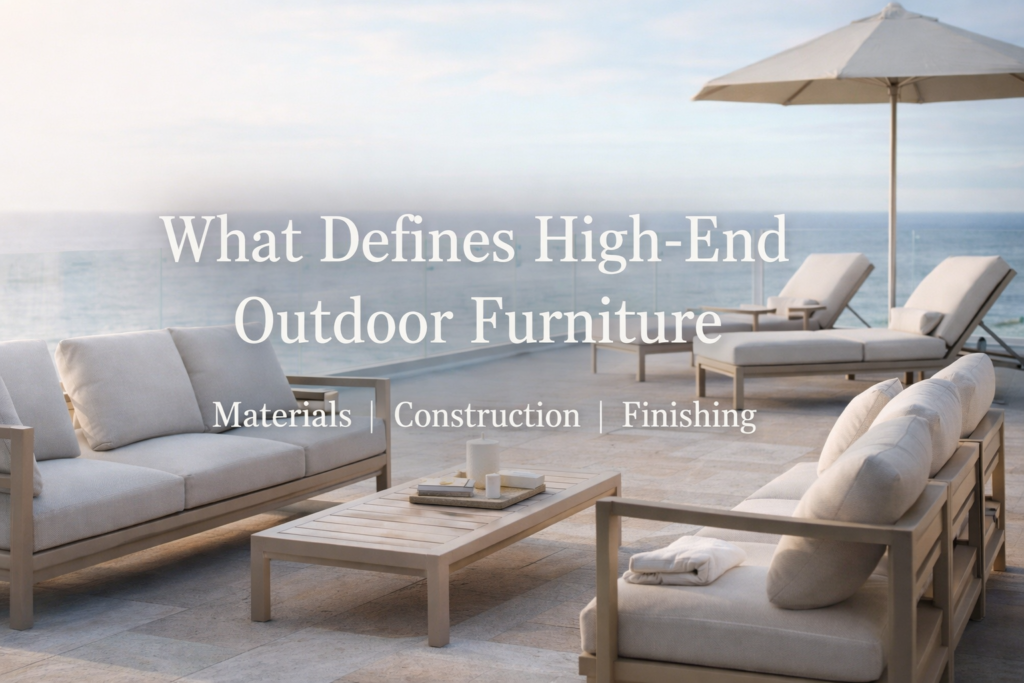
The term high end outdoor furniture is often used loosely.
It is applied to products with refined silhouettes, neutral palettes, or carefully styled imagery. At a glance, many pieces appear elevated—balanced proportions, soft textures, and a sense of calm composition.
Yet over time, a distinction begins to emerge.
Some pieces retain their presence. They age quietly, maintaining both structure and visual integrity. Others, despite their initial appeal, begin to fade—surfaces soften, forms shift, details lose precision.
What separates these outcomes is not style. It is how the furniture is made.
From a manufacturing perspective, high-end outdoor furniture is defined by three interrelated elements: the materials selected, the way the structure is constructed, and the discipline applied in finishing.
Materials determine how a piece ages
Materials are often discussed in terms of appearance—tone, texture, or color. In outdoor environments, their deeper role is revealed over time.
Sunlight, moisture, temperature variation, and daily use gradually test every surface. Materials that perform well in controlled environments may behave very differently outdoors.
High-end outdoor furniture begins with materials that are selected not only for how they look, but for how they endure.
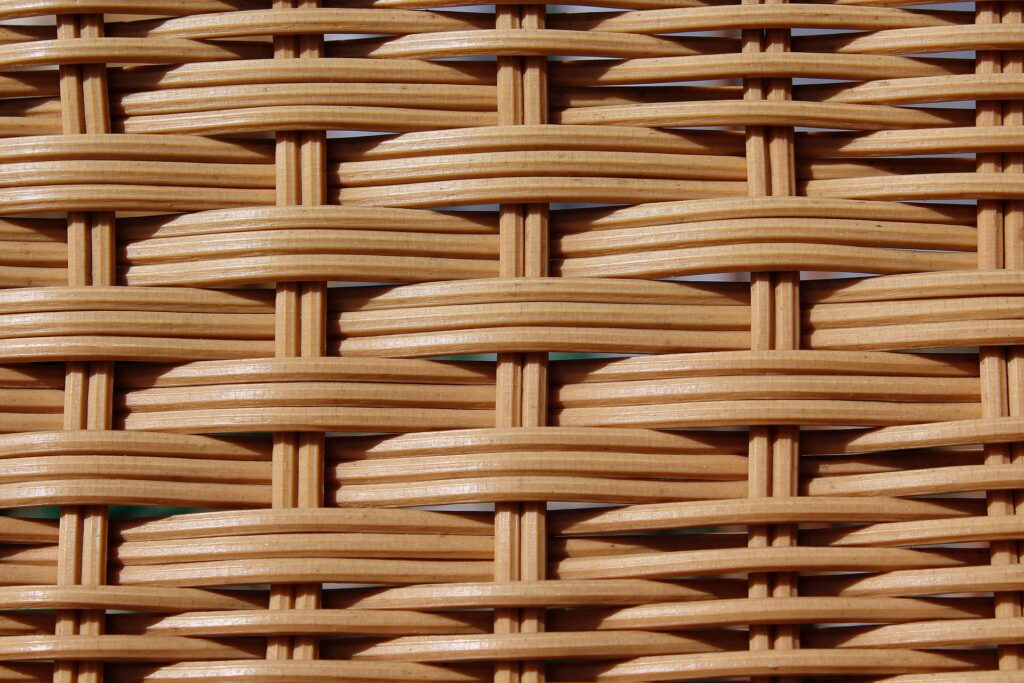
Metals are chosen for stability and resistance to corrosion. Wood is selected for density and natural durability. Synthetic materials are engineered to maintain flexibility and color consistency under UV exposure.
Performance fabrics are not defined by softness alone, but by their ability to resist fading, moisture, and wear while retaining their original character.
Over time, these choices become visible. The furniture does not simply remain intact—it continues to feel composed.
This approach to material selection is closely aligned with the principles outlined in
Most Durable Outdoor Furniture Materials for Commercial Use.
Construction defines whether the form holds
If materials determine how a piece ages, construction determines whether it holds its shape.
In high-end outdoor furniture, structure is not only about strength. It is about precision.
The way components are joined, the way weight is distributed, and the way forces move through the frame all influence how the furniture performs over time.
Well-constructed pieces feel stable without effort. They do not shift under use, and they return to their original form after repeated loading.
This level of stability is rarely achieved through material alone. It is the result of careful engineering and controlled fabrication.
In lower-quality products, compromises in construction often remain hidden at first. Over time, they reveal themselves through small inconsistencies—movement at joints, subtle deformation, or loss of alignment.
High-end construction avoids these issues not by adding complexity, but by resolving them at the source.
In project-based environments, this level of construction quality is often developed through close coordination between design intent and manufacturing execution, as described in
How Custom Outdoor Furniture Works for Hotel & FF&E Projects.
Finishing is where craftsmanship becomes visible
If materials and construction form the foundation, finishing is where craftsmanship becomes visible.
Finishing is often perceived as a final step, but in high-end outdoor furniture, it is an integral part of the process.
Surfaces are refined not only to achieve a certain visual quality, but to ensure durability. Edges are softened to prevent wear. Coatings are applied with consistency to protect underlying materials. Transitions between elements are resolved so that the piece feels continuous rather than assembled.
These details are subtle, yet they shape the way a piece is experienced.
Over time, finishing determines how the furniture responds to its environment. A well-finished surface maintains its integrity. A poorly executed one begins to show signs of fatigue—uneven fading, surface breakdown, or loss of cohesion.
The difference is rarely dramatic at first. It becomes clear through use.
High-end is not a style, but a standard
One of the common misconceptions is that “high-end” refers to a particular aesthetic.
In reality, high-end outdoor furniture is not defined by style, but by consistency.
Consistency in how materials are selected.
Consistency in how structures are built.
Consistency in how finishes are applied.
This consistency allows the furniture to perform as intended—not only on the first day, but over time.
It is also what allows designers and procurement teams to rely on the product in demanding environments, where both visual quality and durability are required.
This is why supplier capability becomes critical. High-end furniture is not only designed; it must be executed with precision. The criteria for evaluating such manufacturers are discussed in
What Makes a Reliable Outdoor Furniture Manufacturer in China.
High-end outdoor furniture is often recognized intuitively, but its defining qualities are not accidental.
They are the result of deliberate decisions in materials, careful control in construction, and disciplined execution in finishing.
When these elements are aligned, the furniture does not compete for attention. It settles into its environment with quiet confidence, maintaining both function and form over time.
And it is within that consistency that the true meaning of high end outdoor furniture is found.

Pingback: Pedro Lopez