
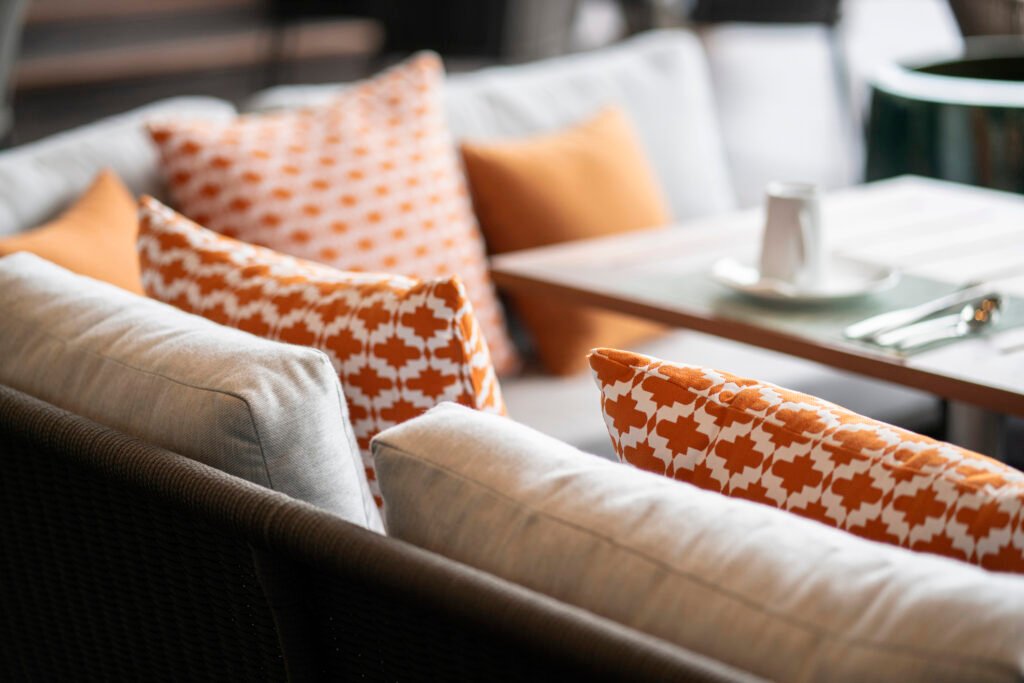
Outdoor cushions often look deceptively simple.
Fabric surrounds foam, a zipper closes the cover, and the cushion sits on a furniture frame.
For professional outdoor furniture, the engineering is considerably more important.
Heat, humidity, rain, UV exposure, sunscreen, chlorine, repeated compression and intensive commercial use all place demands on a cushion that indoor upholstery never experiences.
For hotel, resort, restaurant and luxury residential projects, understanding cushion construction before production can prevent many of the most common after-sales problems.
Start With the Environment
There is no universally “best” outdoor cushion.
A cushion used beneath a covered terrace in California faces different conditions from one beside a swimming pool in Florida or on a beachfront resort in the Caribbean.
Before specifying construction, determine:
- whether the furniture is covered or fully exposed,
- frequency and intensity of rainfall,
- humidity,
- expected commercial usage,
- proximity to pools or salt water,
- storage availability,
- and maintenance routines.
These factors determine how aggressively the cushion needs to manage moisture.
Standard Foam
Conventional high-density polyurethane foam can provide excellent comfort and shape retention.
It can work well in protected outdoor areas when paired with appropriate fabric and moisture barriers.
However, conventional foam does not drain rapidly.
If large quantities of water penetrate the cushion, drying can take considerably longer than with purpose-designed outdoor constructions.
That makes it less suitable for furniture that will remain exposed to frequent heavy rain.
Quick-Dry and Reticulated Foam
Reticulated foam uses an open-cell structure that allows water and air to move through the cushion much more freely.
Rather than attempting to make the cushion completely impermeable, the construction is designed around rapid drainage.
This approach can be particularly valuable for poolside furniture, resorts and humid environments.
The trade-off is cost.
Quick-dry foam is generally more expensive than standard upholstery foam, so it should be specified where the environment justifies the additional performance.
Drainage Is a System
Using quick-dry foam alone does not automatically create a quick-drying cushion.
Water needs somewhere to go.
The cushion cover, inner liner, zipper orientation and furniture seat platform all influence drainage.
A well-designed cushion sitting on a solid seat pan with no drainage can still retain moisture.
Likewise, a highly water-resistant fabric can slow evaporation if moisture enters through seams and cannot escape.
Outdoor furniture should therefore be considered as a complete moisture-management system.
Fabric Selection
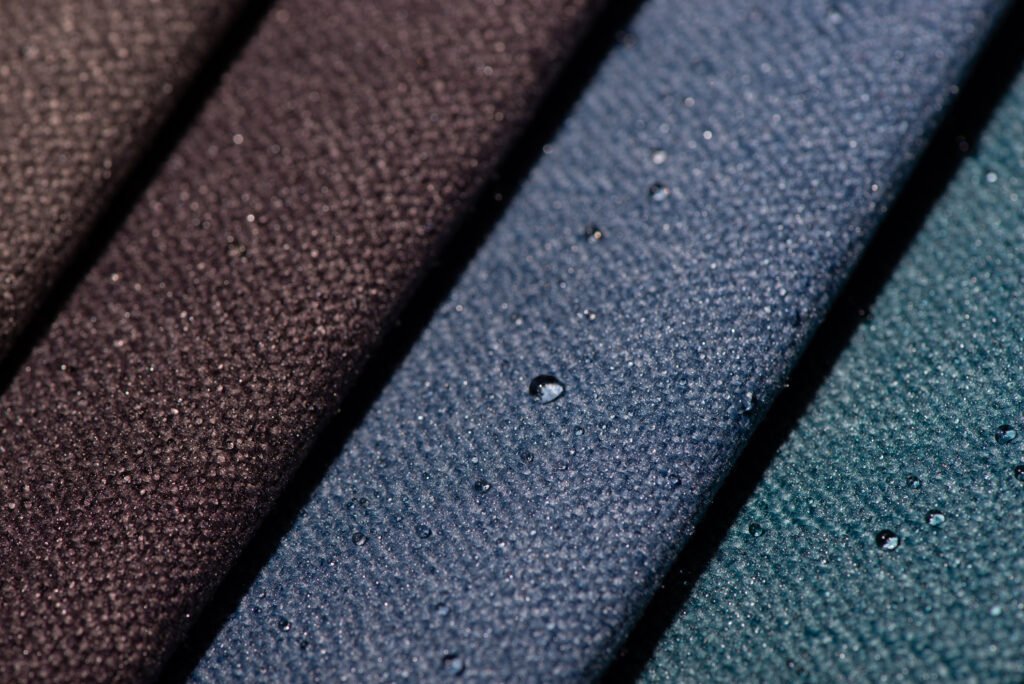
Performance fabrics should be evaluated for more than color.
Professional buyers should consider:
UV resistance. Prolonged sunlight can fade inferior fabrics surprisingly quickly.
Colorfastness. Dark or saturated colors may require particularly strong performance.
Abrasion resistance. Hospitality cushions experience much more frequent use than residential cushions.
Stain resistance. Sunscreen, beverages and food are unavoidable in many outdoor environments.
Cleanability. Maintenance teams should be able to clean the textile without complicated procedures.
Hand feel. Performance should not come at the expense of comfort in luxury projects.
Premium outdoor fabrics increasingly combine technical performance with the softer textures expected from indoor upholstery.
Solution-Dyed Fibers
Solution-dyed acrylic and other solution-dyed performance fibers are widely used in premium outdoor upholstery.
Because pigment is incorporated into the fiber rather than applied only to its surface, these textiles can offer excellent resistance to fading.
Brands and specifications vary, so buyers should still request technical information relevant to their project rather than relying solely on a material category.
Cushion Density and Comfort
Foam density and foam firmness are not the same thing.
Density relates primarily to the amount of material in the foam and can influence durability.
Firmness describes how the cushion feels when compressed.
A hospitality sofa therefore does not simply need the “highest density foam.”
Its cushion construction needs to balance support, comfort, appearance and recovery.
Layered constructions can also be used.
A supportive foam core may be wrapped with softer material to create a more relaxed surface while maintaining structure.
Seat Cushions and Back Cushions Need Different Construction
Seat cushions support significantly more weight and usually require firmer construction.
Back cushions can generally be softer.
Depending on the design, back cushions may use soft foam, fiber filling or combinations that create a more residential appearance.
This distinction is important when buyers want the relaxed appearance of indoor furniture outdoors.
Simply making every cushion from the same foam rarely produces the best result.
Removable Covers Matter
For commercial environments, removable cushion covers are strongly recommended wherever the design allows.
They make cleaning easier and allow damaged fabric to be replaced without replacing the entire cushion.
Buyers should also consider purchasing spare fabric or replacement covers with the original order.
Dye lots can vary, and textile collections can eventually be discontinued.
A modest quantity of spare material can therefore protect a project years later.
Details Determine Durability
Seemingly minor details can affect long-term performance:
zipper quality, thread specification, seam construction, piping, Velcro attachment and cushion ties all deserve attention.
For high-use hospitality furniture, these components should be selected as functional elements rather than decorative afterthoughts.
Ask Suppliers the Right Questions
Instead of requesting simply “waterproof cushions,” professional buyers should ask:
What foam construction is being proposed?
How does water leave the cushion?
Is the fabric UV resistant?
Are the covers removable?
What material is used for the zipper?
Can replacement covers be ordered later?
How does the furniture frame itself drain?
Those questions produce far more useful information than a generic waterproof claim.
Outdoor Comfort Should Be Engineered
The best outdoor furniture increasingly feels like indoor furniture.
Deep seating, generous cushions and tactile fabrics are becoming standard expectations for luxury exterior environments.
Achieving that experience outdoors, however, requires engineering behind the softness.
Foam, fabric, drainage, frame construction and maintenance must work together.
For CG Outdoor projects, cushion systems can be configured according to climate, installation environment and expected use—from protected residential terraces to demanding resort and hospitality applications.
The objective is not simply to keep cushions dry.
It is to create outdoor upholstery that remains comfortable, presentable and serviceable throughout the life of the project.

Pingback: Lysander Overstreet