
The most expensive outdoor furniture is not necessarily the furniture with the highest purchase price.
Sometimes it is the furniture that cannot be repaired.
A hotel may have a sofa with a perfectly sound aluminum frame but one damaged cushion.
A restaurant may have a dining chair with worn rope while the structure remains strong.
A resort may have twenty loungers that only need replacement covers.
If those components cannot be replaced independently, a relatively small maintenance problem becomes a furniture replacement project.
For professional buyers, this is why serviceability should be considered before the first order is placed.
Think Beyond Purchase Price
Furniture quotations naturally encourage buyers to compare unit prices.
Chair A: $180.
Chair B: $210.
On a 200-chair project, the difference appears significant.
But the real comparison should consider the complete service life.
Imagine that after three seasons Chair A develops worn weaving that cannot practically be replaced.
The entire chair must be discarded.
Chair B was designed with replaceable woven sections.
Only the damaged component is serviced.
Suddenly the more expensive chair may have become the lower-cost product.
This is lifecycle cost.
Outdoor Furniture Is a System of Components
A sofa should not be viewed as one object.
It is a collection of systems:
frame
finish
seat support
cushion foam
fabric cover
zipper
hardware
feet
connectors
rope or weaving
decorative components.
These components age at different rates.
An aluminum frame may remain structurally sound for many years while upholstery experiences much faster wear.
A teak frame may develop a patina while the cushion fabric eventually requires replacement.
Good commercial furniture therefore allows the shorter-life components to be serviced without replacing the longest-life components.
Cushions Are the First Place to Start
For hospitality projects, cushions are one of the most important replaceable components.
They experience:
UV exposure, rain, sunscreen, beverages, cleaning chemicals and repeated compression.
Even premium performance fabrics are consumable components over a sufficiently long service period.
Removable covers therefore offer significant advantages.
They allow housekeeping or maintenance teams to:
remove covers for cleaning, replace damaged fabric, refresh the property’s appearance, and retain the existing foam where appropriate.
Professional buyers should also consider purchasing spare covers or spare fabric with the original furniture order.
This solves an overlooked problem.
Textile collections change.
Colors are discontinued.
Dye lots vary.
Five years later, reproducing the exact original cushion may be considerably harder than expected.
Rope and Woven Components
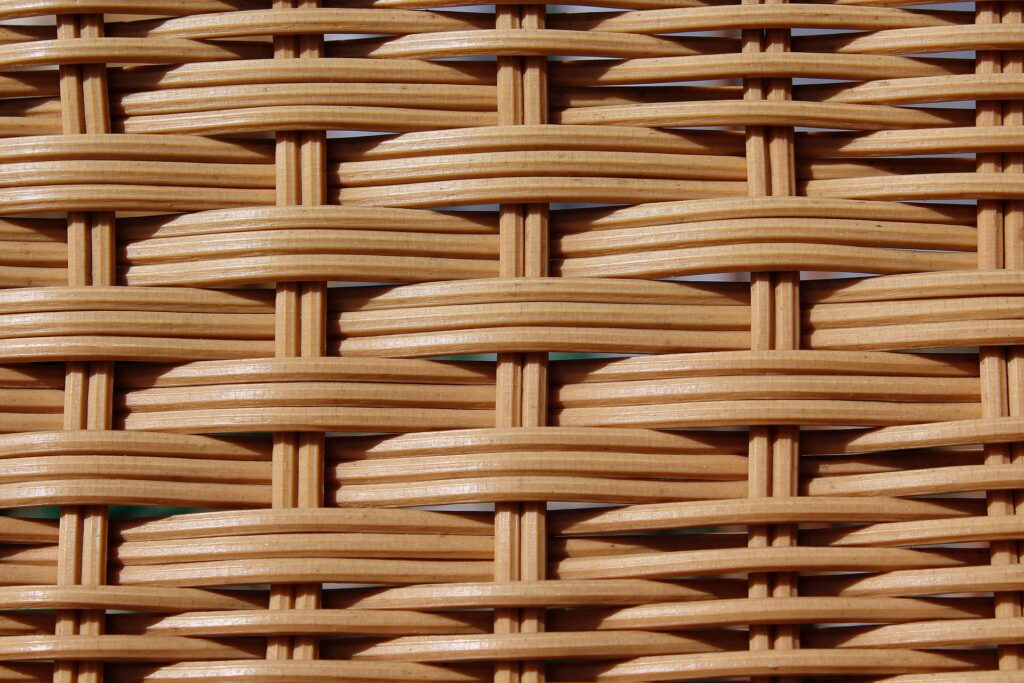
Rope furniture creates texture and visual softness, which is why it works particularly well in contemporary resorts and residential outdoor spaces.
But weaving is exposed directly to the environment and guest contact.
Professional furniture should therefore be designed with future servicing in mind.
Depending on the product, the manufacturer may be able to replace:
a woven back panel, seat weaving, rope arm detail, or an entire woven shell.
This possibility should be discussed during development.
Some furniture designs look beautiful but are extremely difficult to reweave once fully assembled.
That difference may not be visible in a rendering.
It becomes very visible several years later.
Hardware Should Be Accessible
Outdoor furniture commonly uses bolts, screws, glides, connectors and leveling feet.
These are inexpensive components.
But they can disable an expensive piece of furniture if replacements are unavailable.
Commercial buyers should ask whether important hardware uses standardized specifications.
For large hospitality projects, a small spare-parts kit can be supplied with the furniture order.
It might contain:
extra feet, connectors, bolts, screws, brackets and touch-up materials.
The cost is usually minor compared with the value of keeping furniture operational.
Modular Furniture Adds Another Layer of Flexibility
Modular seating has another advantage beyond layout flexibility.
Individual sections can sometimes be replaced independently.
Consider a five-module sectional.
If one armless module becomes damaged, replacing one section is considerably easier than replacing the entire configuration.
Modular systems can also adapt when the property changes.
A hotel might initially create large lounge groups.
Later, the same modules can be reorganized into smaller seating arrangements.
That makes modularity not only a design feature but an asset-management strategy.
Standardization Helps Large Projects
Hotels and resorts often make a mistake when every area receives completely different furniture.
Visually, this creates variety.
Operationally, it creates complexity.
Ten sofa models may require:
ten cushion sizes, multiple fabrics, different hardware, different replacement covers and different maintenance procedures.
A smarter specification can create visual variety while retaining hidden standardization.
For example, several collections might share: the same cushion depth, hardware system, aluminum finish or fabric family.
The guest sees variety.
The maintenance team sees simplicity.
Keep a Furniture Specification Archive
After a project is delivered, buyers should retain a basic furniture archive.
For each product, record:
product code
dimensions
frame material
finish/color reference
fabric supplier and code
foam construction
rope specification
hardware specification
purchase date
production batch.
Photography is also useful.
This information becomes extremely valuable when replacement parts are required several years later.
Without it, the conversation often begins with:
“We bought this chair a few years ago. Can you identify it from this photo?”
Sometimes the answer is possible.
Sometimes it is not.
Ask About Replacement Parts Before Ordering
The best time to discuss replacement components is not when something breaks.
It is during procurement.
Ask the supplier:
Can cushion covers be ordered separately?
Can complete cushions be replaced?
Can rope sections be rewoven?
Are feet and glides replaceable?
Can hardware be supplied separately?
How long will product specifications be retained?
Can spare fabric be ordered with production?
Can individual modular units be purchased later?
These questions reveal something important about a manufacturer.
They show whether the product was designed only to be sold, or whether it was designed to be used and maintained.
Design for Maintenance Without Looking Commercial
Serviceable furniture does not need to look industrial.
In fact, some of the most sophisticated outdoor spaces conceal considerable engineering beneath simple forms.
A clean teak sofa may contain replaceable cushions.
A refined rope chair may use serviceable woven sections.
A minimalist sectional may actually consist of interchangeable modules.
The visual experience remains quiet and residential.
The engineering behind it is commercial.
That balance is particularly important for luxury hospitality.
Guests should experience comfort and design.
Operators need durability and maintainability.
Good furniture delivers both.
Sustainability and Lifecycle Are Connected
Furniture sustainability is often discussed primarily in terms of materials.
Recycled aluminum.
Certified timber.
Recyclable packaging.
These are important considerations.
But product longevity matters too.
Keeping a structurally sound chair in service and replacing only the worn component avoids unnecessary material consumption and transportation.
Repairability therefore supports both operational economics and responsible resource use.
Specify the Second Life Before the First Order
Professional furniture procurement should ask one final question:
What happens to this product when its first component wears out?
If the answer is “replace the entire product,” the specification deserves another look.
If cushions, covers, hardware and other wear components can be maintained independently, the furniture has a much stronger chance of remaining useful and presentable for years.
For CG Outdoor, this is particularly relevant when developing custom furniture for hotels, resorts, restaurants and large residential projects.
The objective should not simply be to manufacture furniture that arrives looking good.
It should be to create furniture that can continue looking good—and remain serviceable—throughout the life of the project.
That is the difference between purchasing furniture and planning a furniture asset.