Material selection is one of the most consequential decisions in an outdoor furniture project.
For professional buyers, however, choosing a material is rarely as simple as deciding between teak and aluminum. The correct specification depends on where the furniture will be installed, how intensively it will be used, how much maintenance the operator can realistically provide, and how long the project is expected to perform.
A beachfront resort, rooftop restaurant, private residence and poolside club may use visually similar furniture while requiring very different construction underneath.
Understanding those differences helps buyers specify furniture that looks refined on opening day—and continues to perform years later.
Teak: Natural Character With Long-Term Outdoor Performance
Teak remains one of the most established materials for premium outdoor furniture.
Its natural oils and dimensional stability make properly selected teak particularly suitable for exterior environments. Over time, untreated teak develops its familiar silver-grey patina. Buyers who prefer the original warm appearance can maintain it periodically with appropriate cleaning and finishing products.
For commercial projects, the important questions go beyond simply asking whether a product is “teak.”
Buyers should confirm the timber grade, moisture condition, joinery, component thickness and finishing process.
A beautifully photographed teak chair with undersized structural members may not provide the same service life as a properly engineered contract piece.
Teak works especially well for resorts, villas, restaurants and projects where natural materials form part of the architectural language.
Powder-Coated Aluminum: Versatile and Low Maintenance
Aluminum has become one of the most practical structural materials in contemporary outdoor furniture.
It is lightweight, corrosion resistant and capable of supporting very clean silhouettes. Powder coating also gives designers considerable freedom in color and texture.
For professional procurement, frame construction matters.
Buyers should evaluate tube dimensions, wall thickness, welding quality, reinforcement around stress points and the quality of the powder-coating system.
Coastal environments require particular attention because salt exposure accelerates deterioration of poorly prepared finishes and hardware.
Well-engineered aluminum furniture can provide an excellent balance between appearance, handling weight, maintenance and project cost.
This makes it particularly useful for hotels, restaurants and other properties where furniture may be moved regularly.
Stainless Steel: Refined Strength
Stainless steel offers a distinctly architectural appearance.
Grades such as 304 stainless steel are commonly used in furniture, while 316 stainless steel provides better corrosion resistance and is generally preferred where salt exposure is significant.
That distinction matters for coastal hospitality projects.
A product described simply as “stainless steel” does not provide enough information for professional specification.
Buyers should confirm the grade as well as welding, surface finishing and maintenance requirements.
Even high-quality stainless steel requires cleaning in aggressive marine environments.
Outdoor Rope: Texture Without Visual Weight
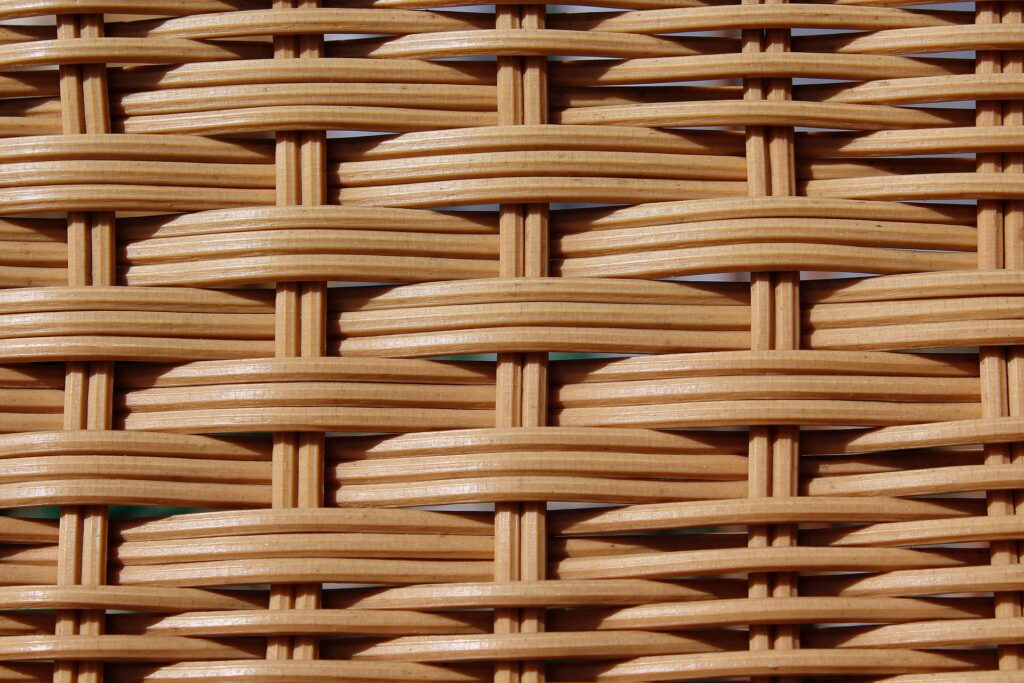
Woven rope has become an important design element in contemporary outdoor collections because it introduces texture while keeping furniture visually light.
But outdoor rope is not one universal material.
Fiber composition, UV stability, water absorption, internal reinforcement and weaving tension all influence performance.
For contract furniture, rope construction should also be designed so that damaged sections can be serviced where practical.
This becomes particularly valuable for hotels and restaurants where replacing an entire chair because of localized wear can be unnecessarily expensive.

Performance Fabrics: Comfort Is Only Half the Specification
Outdoor upholstery often determines how guests actually experience a furniture collection.
A premium frame paired with inappropriate fabric or cushion construction can still create a disappointing product.
Professional buyers should consider UV resistance, colorfastness, abrasion performance, water behavior, stain resistance and cleanability.
Cushion construction matters equally.
Outdoor cushions should be engineered to release moisture rather than trap it. Depending on the application, this may involve quick-dry foam, reticulated foam, drainage layers or other moisture-management construction.
Removable covers are also valuable for hospitality projects because they simplify maintenance and replacement.
Material Combinations Are Often More Important Than Individual Materials
Some of the most successful outdoor furniture combines several materials rather than relying on one.
A collection might use:
- powder-coated aluminum for the structural frame,
- teak for tactile armrests or tabletops,
- woven rope for visual softness,
- and performance fabric for comfort.
This allows each material to perform the function it handles best.
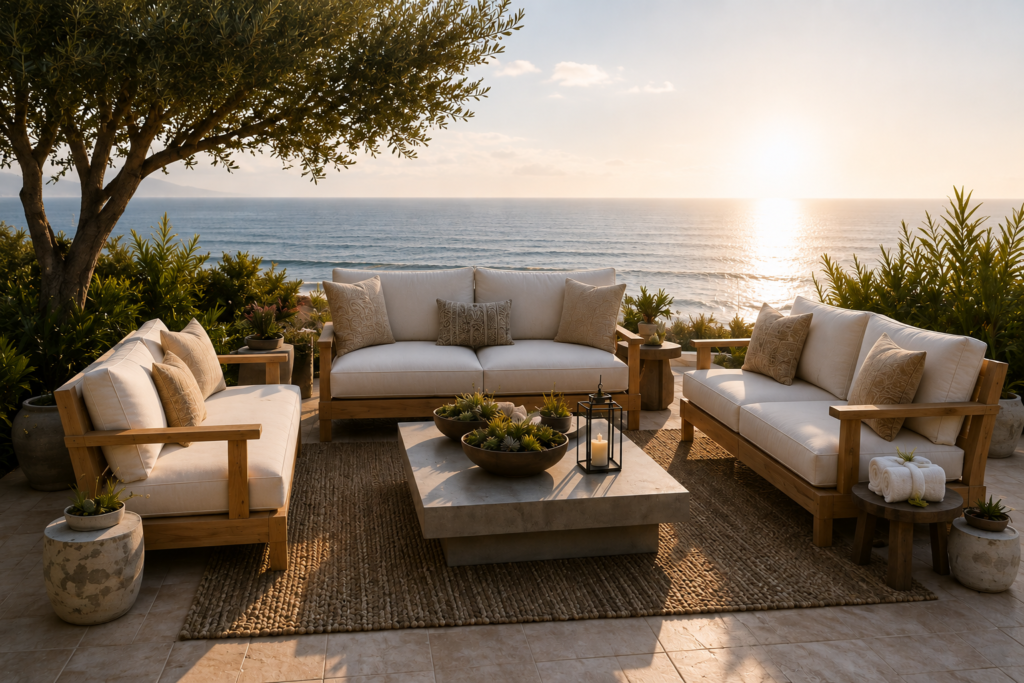
The result can also create the layered, residential feeling increasingly expected in luxury hospitality environments.
Residential Furniture and Contract Furniture Are Not the Same Specification
A private terrace may use a lounge chair a few times each week.
A resort may have the same chair occupied, moved, cleaned and exposed to sunscreen, pool chemicals and weather every day.
That difference changes the specification.
Commercial buyers should consider load requirements, structural reinforcement, replaceable components, cleaning procedures, spare parts and maintenance access before approving production.
Think in Terms of Lifecycle Value
The lowest purchase price does not necessarily produce the lowest project cost.
Furniture that requires frequent refinishing, cushion replacement or structural repair can become significantly more expensive over several seasons.
A better procurement question is:
What will this furniture cost to own, maintain and keep presentable over its intended service life?
That perspective frequently changes material decisions.
A Better Way to Specify Outdoor Furniture
Before requesting quotations, buyers should provide suppliers with information about the actual installation environment.
Useful information includes:
climate, distance from the coast, commercial or residential use, expected occupancy, desired maintenance level, preferred appearance and required project lifespan.
The more accurately the operating environment is defined, the more intelligently materials and construction can be specified.
At CG Outdoor, material selection is treated as part of the engineering process rather than simply a finish choice. Frames, finishes, fabrics, weaving materials and cushion construction can be configured around the requirements of individual residential and hospitality projects.The objective is straightforward: outdoor furniture that looks appropriate for the architecture, performs appropriately for the environment and delivers lasting value to the buyer.