Quick Answer
How long should outdoor furniture last?
High-quality outdoor furniture should generally last 10 to 20 years or more, depending on the materials, construction quality, climate, maintenance, and daily use. Premium teak furniture can last for decades, while powder-coated aluminum often provides 15–20 years of reliable performance. More importantly, the lifespan of outdoor furniture depends not only on how it’s built, but also on how it’s cared for throughout the years.
Outdoor Furniture Doesn’t Have an Expiration Date
One of the most common questions homeowners ask before making a purchase is:
“How long will this furniture last?”
It’s a reasonable question.
After all, outdoor furniture is an investment, and people naturally want to know how many years they can expect to enjoy it.
The truth, however, is more complicated than a simple number.
Unlike household appliances or electronics, outdoor furniture doesn’t come with a fixed lifespan.
Two identical dining sets placed in different environments can age very differently.
One may still look beautiful after fifteen years.
The other may show significant wear after only five.
The difference isn’t always the furniture itself.
More often, it’s how the furniture is designed, where it’s used, and how it’s cared for over time.
Good Design Determines How Furniture Ages
The lifespan of outdoor furniture begins long before it reaches your patio.
It begins during the design and manufacturing process.
Details that aren’t immediately visible often make the biggest difference years later.
For example:
- Powder-coated finishes help protect aluminum from corrosion.
- Proper drainage prevents water from collecting inside frames.
- Marine-grade hardware resists rust in coastal environments.
- Quality joinery improves structural stability.
- Performance fabrics better withstand sunlight and moisture.
These details rarely appear in lifestyle photos, yet they largely determine how furniture performs season after season.
Well-designed furniture doesn’t simply survive the weather.
It is designed to age gracefully.
Climate Plays a Bigger Role Than Most People Think
Outdoor furniture experiences very different conditions depending on where it lives.
A patio in Arizona faces intense UV exposure and extreme summer heat.
A coastal home in Florida deals with humidity, salt air, and frequent rain.
The Pacific Northwest sees long wet seasons.
Northern climates bring snow, ice, and repeated freeze-thaw cycles.
No single material performs identically in every environment.
That’s why choosing furniture suited to your local climate is just as important as choosing the style you love.
The right material in the right environment will almost always outlast the wrong material in the wrong one.
Material Quality Matters—But It’s Only Part of the Story
Certain materials naturally offer excellent longevity.
Teak remains one of the most durable hardwoods because of its natural oils and resistance to moisture.
Powder-coated aluminum is lightweight, rust-resistant, and requires very little maintenance.
Marine-grade stainless steel performs exceptionally well in coastal settings.
High-quality outdoor rope and premium PE wicker can also provide years of reliable use when manufactured to a high standard.
However, no material is completely maintenance-free.
Even the best materials benefit from regular care.
The goal isn’t to keep outdoor furniture looking brand new forever.
It’s to help it continue performing beautifully year after year.
How You Use Outdoor Furniture Has a Bigger Impact Than You Might Expect
Perhaps the biggest factor affecting lifespan isn’t the material.
It’s everyday use.
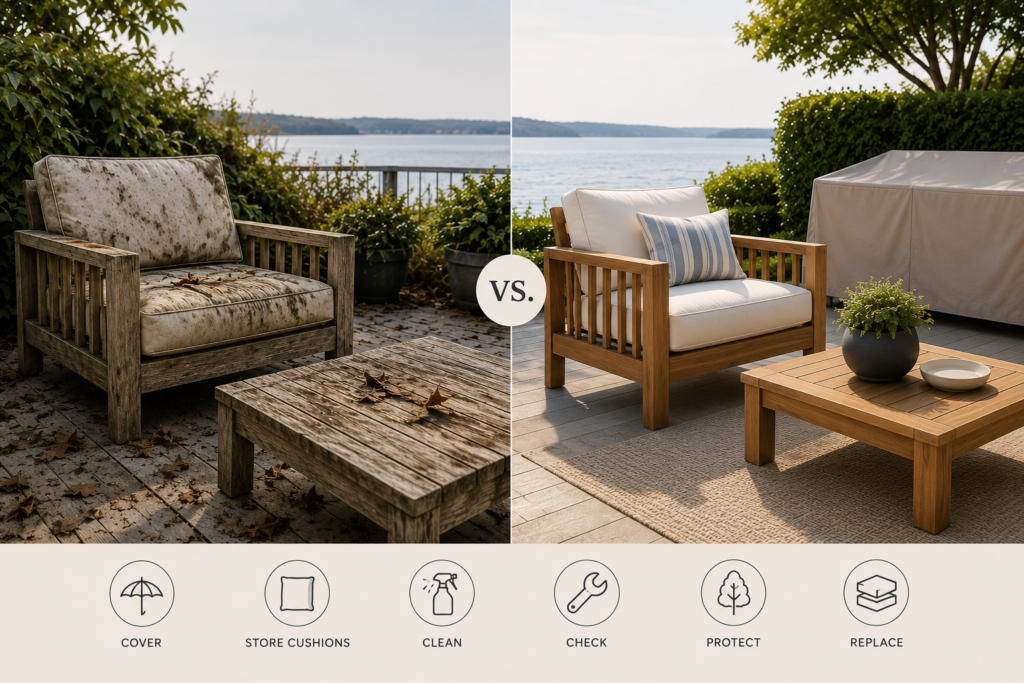
Imagine two identical outdoor dining sets.
The first remains uncovered throughout the year.
Rainwater sits on the tabletop.
Leaves collect in corners.
Cushions stay outside through every season.
Dust, pollen, bird droppings, and moisture gradually build up.
The second dining set is used just as often, but it’s treated differently.
When not in use for extended periods, it is protected with a well-fitted rain cover.
Cushions are stored in a dry place during prolonged rain or winter.
The furniture is cleaned several times each year.
Small issues are addressed before they become larger problems.
Although both sets began in exactly the same condition, their appearance after ten years could be dramatically different.
Outdoor furniture is designed to live outside.
That doesn’t mean it should be neglected.
Simple Maintenance Makes a Remarkable Difference
One reason some homeowners avoid maintenance is the belief that it requires a great deal of time.
Fortunately, that’s rarely true.
A few simple habits can significantly extend the life of outdoor furniture:
- Clean surfaces regularly to remove dirt, pollen, and salt.
- Use breathable rain covers when furniture won’t be used for extended periods.
- Store cushions in a dry place during prolonged bad weather.
- Tighten hardware once or twice each year.
- Wash outdoor fabrics according to the manufacturer’s recommendations.
- Apply teak protector or sealer if maintaining the original wood color is important.
Most of these tasks require only a small amount of time.
Together, they can add years to the furniture’s appearance and performance.
Replace Components Instead of Replacing the Entire Set
One characteristic of high-quality outdoor furniture is that individual components can often be replaced.
Instead of discarding an entire sofa because the cushion covers have faded, new covers may restore its appearance.
A damaged tabletop may be replaced while keeping the existing frame.
Individual dining chairs can sometimes be reordered without purchasing a completely new set.
This approach not only reduces long-term costs but also supports a more sustainable way of furnishing outdoor spaces.
Well-designed furniture should be maintained, refreshed, and enjoyed—not treated as disposable.
Think in Decades, Not Seasons
When people ask how long outdoor furniture should last, they’re really asking a different question:
“Will this still be worth owning years from now?”
The answer depends on much more than the purchase price.
It depends on thoughtful design.
Quality materials.
Skilled craftsmanship.
Proper care.
And choosing furniture that’s appropriate for the environment in which it will live.
At CG Outdoor, we believe outdoor furniture should be designed for years of everyday living—not just a few seasons of use. By combining durable materials, carefully engineered construction, replaceable components, and practical maintenance, we help create outdoor spaces that continue to bring comfort, beauty, and connection long after the day they are delivered.
Conclusion
Outdoor furniture isn’t expected to stay untouched by time.
Like a well-loved home, it develops character through years of use.
The goal isn’t to prevent every sign of aging.
It’s to ensure that the furniture continues to perform, remain comfortable, and look beautiful throughout its life.
With quality materials, thoughtful design, and a little regular care, outdoor furniture can become something far more valuable than a seasonal purchase.
It can become part of the place where memories are made—year after year.
CG Outdoor Care Tip
Using a breathable rain cover is one of the simplest ways to extend the life of outdoor furniture. While premium outdoor furniture is designed to withstand the elements, protecting it during extended periods of rain, snow, or non-use helps reduce dirt buildup, UV exposure, standing water, and unnecessary wear. Combined with regular cleaning and seasonal maintenance, a quality rain cover can significantly preserve both the appearance and performance of your outdoor furniture.