
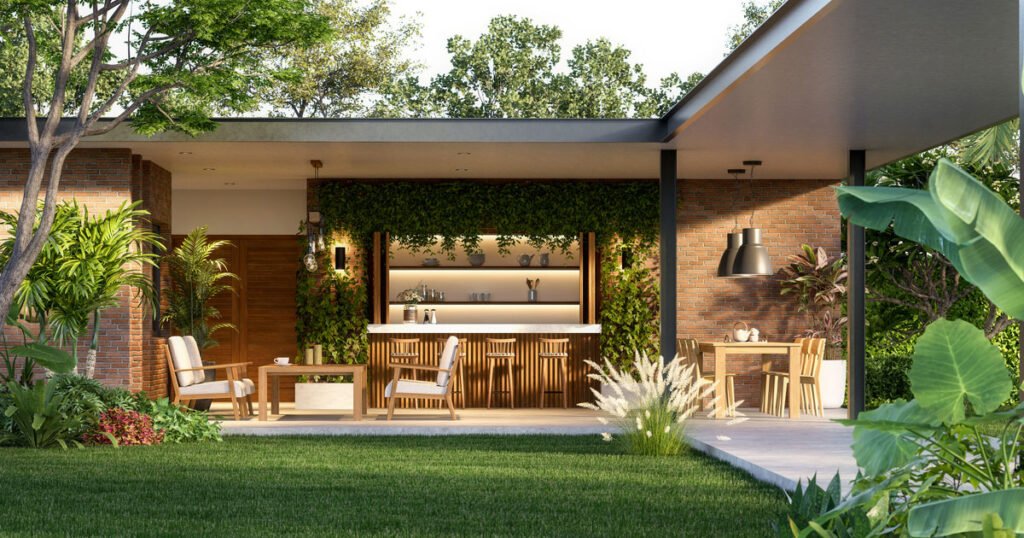
In hospitality environments, an outdoor dining set is rarely just furniture.
It becomes part of the daily rhythm of a space—used continuously, moved frequently, exposed to weather, and expected to remain stable under constant activity. Unlike lounge furniture, which allows for a certain degree of flexibility, dining furniture operates within a stricter expectation: it must feel solid, balanced, and dependable every time it is used.
And yet, many issues in outdoor dining areas do not appear immediately. A table that seems stable on installation day may begin to shift slightly over time. A chair that feels adequate at first may gradually lose its integrity under repeated use.
These are not aesthetic problems. They are structural ones.
From a manufacturing perspective, the long-term performance of an outdoor dining set is largely defined by two elements: the stability of the table and the load capacity of the chairs.
Stability is what makes a table feel trustworthy
A dining table does not need to move, but it must respond to movement.
Guests lean forward, shift weight, place uneven loads on the surface. In a commercial environment, these small actions happen continuously. Over time, even minor instability becomes noticeable.
A well-constructed table feels quiet. It does not react visibly when touched. It holds its position without adjustment.
This sense of stability is not accidental. It is created through proportion and structure.
The relationship between the tabletop and the base is critical. A table that appears visually minimal may lack the structural depth needed to remain stable. Similarly, a base that is not properly balanced can create subtle movement, even if the materials themselves are strong.
In outdoor environments, additional factors come into play. Ground surfaces are rarely perfectly even. Temperature changes affect materials. Frequent repositioning introduces stress to connection points.
Because of this, table design must account for more than static weight. It must anticipate real use.
In high-quality outdoor dining tables, stability is achieved through a combination of:
- well-balanced structural geometry
- sufficient material thickness
- reinforced connection points
- precise fabrication
These principles are closely related to broader durability considerations discussed in
Most Durable Outdoor Furniture Materials for Commercial Use.
A table that remains stable over time does not draw attention to itself. It simply allows the dining experience to unfold without interruption.
Chairs carry more responsibility than they appear to
If the table defines the setting, the chair defines the experience.
In a commercial setting, dining chairs are subject to continuous and unpredictable use. Guests sit, lean, shift, and reposition. Weight is rarely distributed evenly. The chair must respond to all of this without compromise.
This is where load capacity becomes critical.
A chair may appear identical across different suppliers, yet perform very differently in use. The difference often lies beneath the surface—in the way the frame is constructed, reinforced, and tested.
From a manufacturing perspective, load capacity is not only about how much weight a chair can hold in a static sense. It is about how the chair behaves under repeated stress.
A well-built dining chair maintains its shape and stability over time. It does not loosen at the joints. It does not develop subtle movement. It continues to feel reliable, even after extended use.
Lower-quality chairs, by contrast, may begin to show small signs of fatigue:
- slight wobbling
- joint movement
- changes in balance
These changes are gradual, but once they begin, they are difficult to reverse.
This is why experienced procurement teams evaluate structural performance rather than relying on appearance alone, a principle also reflected in
Why Choosing the Lowest Quote Often Costs Hotels More in the Long Run.
The difference is often invisible at the beginning
One of the challenges in selecting an outdoor dining set is that many structural differences are not visible at the time of purchase.
Two sets may look nearly identical in proportion, finish, and overall design. Yet their long-term performance can diverge significantly.
This is because what defines durability is often hidden within:
- internal frame construction
- connection methods
- material thickness
- manufacturing precision
These elements are not easily captured in product photos or basic specifications.
As a result, the evaluation of an outdoor dining set often depends on understanding how the product is made, rather than how it appears.
This is where working with experienced manufacturers becomes important. In custom or project-based environments, structural details are often adjusted to meet specific usage conditions. The process of translating design intent into a functional product is outlined in
How Custom Outdoor Furniture Works for Hotel & FF&E Projects.
A well-performing dining set feels effortless
When an outdoor dining set is properly designed and manufactured, it does not call attention to its construction.
The table remains stable without adjustment.
The chairs feel balanced and secure.
The entire setting supports the experience rather than distracting from it.
This sense of effortlessness is often the result of careful structural consideration during the early stages of design and production.
In hospitality projects, where furniture is used daily and at scale, this level of reliability is not optional. It becomes part of the overall quality of the space.
An outdoor dining set should be evaluated not only for its visual presence, but for how it performs under continuous use.
Table stability and chair load capacity are not minor technical details. They are the foundation of long-term usability.
When these elements are properly resolved, outdoor dining furniture can maintain both its appearance and its function over time.
For designers and procurement teams, understanding these structural principles allows for more informed decisions—and helps ensure that the final installation delivers not only visual consistency, but lasting performance.