Quick Answer
Why are matching outdoor furniture sets becoming less popular?
Matching outdoor furniture sets are becoming less popular because homeowners and designers are treating outdoor spaces like extensions of the home rather than separate patio areas. Instead of choosing one furniture collection for the entire space, they combine complementary materials, textures, and colors to create a more natural, personalized, and functional outdoor environment. This approach also allows each area—such as dining, lounging, or poolside relaxation—to better suit its purpose while achieving a more refined overall design.
Outdoor Spaces Are No Longer Designed Like Showrooms
Not long ago, shopping for outdoor furniture was straightforward. A homeowner would visit a showroom, choose a complete collection, and bring home everything from the same series. The dining table matched the chairs, the sofa matched the coffee table, and every frame shared the same finish and material.
It was simple, convenient, and visually consistent.
Today, however, outdoor living has evolved far beyond that concept.
Modern patios, gardens, rooftops, and poolside spaces are increasingly designed as outdoor rooms rather than outdoor furniture displays. Instead of asking, “Which furniture set should I buy?” homeowners now ask, “How do I want this space to feel?”
That subtle shift has changed the way outdoor furniture is selected.
Rather than filling a patio with identical pieces, designers now build outdoor environments layer by layer—much like they would design a living room inside the home.
Why Designers Are Moving Away from Matching Collections
The biggest reason is simple: matching everything can feel predictable.
Professional designers have long understood that visual interest comes from contrast rather than repetition. The same principle applies outdoors.
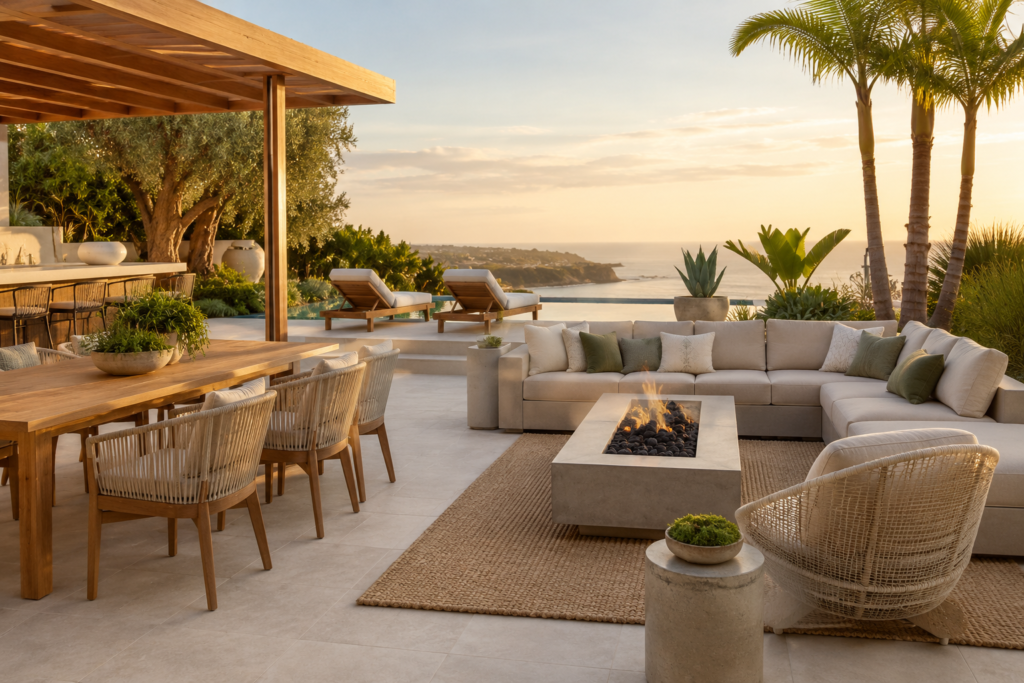
Instead of using one material throughout an entire patio, today’s projects often combine several complementary elements:
- A teak dining table
- Rope dining chairs
- An aluminum sectional sofa
- A natural stone coffee table
- Soft performance fabrics
- Decorative ceramic planters
None of these pieces belong to the same collection, yet together they create a space that feels balanced and intentional.
This layered approach gives outdoor living areas warmth and personality while avoiding the “catalog look” that perfectly matched sets sometimes create.
Mixing Materials Creates a More Natural Outdoor Environment
Nature rarely repeats itself perfectly.
Wood, stone, plants, water, and light all have different textures and colors. When outdoor furniture reflects that same variety, the entire space feels more connected to its surroundings.
One of the strongest trends in luxury outdoor design is mixing materials that complement each other instead of competing for attention.
| Material | Common Application |
| Teak | Dining tables and benches |
| Powder-coated aluminum | Sectional sofas and lounge seating |
| Outdoor rope | Accent chairs and occasional seating |
| GFRC or natural stone | Coffee tables and fire pit tables |
| Performance fabric | Cushions and decorative pillows |
Each material contributes something different.
Teak adds warmth.
Aluminum provides clean architectural lines.
Outdoor rope introduces texture.
Stone creates visual weight.
Performance fabrics soften the overall composition.
The result feels curated rather than manufactured.
Coordinated Colors Matter More Than Identical Colors
One of the biggest misconceptions about outdoor design is that every piece should share the exact same finish.
In reality, designers focus on coordination instead of perfect matching.
For example, a modern outdoor space might include:
- Warm teak wood
- Charcoal aluminum frames
- Sand-colored cushions
- Olive green accent pillows
- Light travertine stone tables
Although each element has its own color, they work together because they belong to the same overall palette.
This creates depth without visual clutter.
The goal isn’t uniformity.
The goal is harmony.
Much like interior design, outdoor spaces benefit from subtle variation that keeps the eye engaged.
Different Outdoor Areas Deserve Different Furniture
Another reason matching sets are becoming less common is that outdoor spaces now serve multiple purposes.
A single backyard may include:
- An outdoor dining area
- A conversation lounge
- A fire pit gathering space
- A poolside relaxation zone
- A quiet reading corner
Each of these areas supports a different activity.
Because their functions differ, their furniture should differ as well.
For example, chaise lounges work beautifully beside a swimming pool, but they aren’t practical around a dining table.
Deep modular sofas encourage conversation around a fire pit, while stackable dining chairs make entertaining easier during large gatherings.
Choosing furniture according to function naturally leads to a mix of styles and materials.
Instead of forcing every area to match, homeowners can optimize each space for comfort and usability.
Luxury Hotels Rarely Furnish Every Space the Same Way
Some of the best inspiration comes from luxury resorts and boutique hotels.
Although these properties maintain a consistent design language, they rarely use identical furniture throughout the entire property.
Consider a typical five-star resort.
The pool deck often features sleek aluminum chaise lounges with quick-dry cushions.
The restaurant terrace may showcase elegant teak dining tables paired with woven rope chairs.
A rooftop lounge could introduce low-profile modular sofas surrounding a contemporary fire pit.
Private villas frequently incorporate softer textures, oversized seating, and more residential styling.
Each area feels connected to the overall brand, yet every space offers a distinct experience.
This approach encourages guests to move through the property while enjoying different atmospheres instead of encountering the same furniture everywhere they go.
Homeowners are increasingly applying this design philosophy to their own outdoor spaces.
How to Mix Outdoor Furniture Without Making It Feel Random
Mixing furniture successfully requires balance rather than complete freedom.
Here are five simple guidelines designers often follow.
Start With One Dominant Material
Choose one material that appears most frequently throughout the space.
For many projects, teak or powder-coated aluminum serves as the visual foundation.
Limit the Number of Materials
Using too many finishes can create visual clutter.
Three primary materials are usually enough to create interest while maintaining consistency.
Repeat Colors Throughout the Space
Accent pillows, planters, rugs, and accessories can connect different furniture collections by repeating similar colors.
Keep Furniture Proportions Consistent
Even when materials vary, similar seat heights and overall proportions help the space feel cohesive.
Let One Piece Become the Focal Point
Every outdoor area benefits from a statement piece.
It might be a sculptural fire pit table, a beautifully crafted teak dining table, or an oversized modular sofa.
Everything else can support that centerpiece without competing for attention.
When a Matching Furniture Set Still Makes Sense
Despite changing trends, matching outdoor furniture sets haven’t disappeared.
In many situations, they remain an excellent choice.
A coordinated collection often works well for:
- Small balconies
- Compact patios
- Vacation rentals
- Airbnb properties
- First-time homeowners
- Projects with tighter budgets
Matching collections simplify the buying process and provide a polished appearance with minimal planning.
For smaller outdoor spaces, that convenience can outweigh the benefits of customization.
The key is understanding that matching furniture is no longer the only—or necessarily the best—option.
Today’s homeowners simply have more flexibility than ever before.
Outdoor Design Is Becoming More Personal
The evolution away from matching furniture reflects a broader change in how people use their homes.
Outdoor spaces are no longer reserved for occasional summer gatherings. They have become places to work, relax, entertain, dine, and spend meaningful time with family and friends.
As lifestyles become more personal, outdoor furniture follows the same path.
Rather than purchasing an entire collection because everything matches, homeowners increasingly choose pieces that fit the way they actually live.
Some prioritize dining.
Others focus on lounging.
Many want a combination of both.
That freedom allows outdoor spaces to feel unique instead of looking like every other patio on the block.
At CG Outdoor, we see this shift reflected in projects around the world. Homeowners, designers, hospitality brands, and commercial buyers increasingly combine teak, aluminum, rope, natural stone, and performance fabrics to create outdoor environments that balance beauty, comfort, and long-term durability. Whether the design calls for a coordinated collection or a carefully curated mix of materials, the most successful outdoor spaces are those that feel authentic to the people who use them.
Conclusion
Matching outdoor furniture sets will always have a place, especially for those seeking a simple and coordinated solution. However, today’s most inspiring outdoor spaces embrace variety with intention.
By mixing complementary materials, coordinating rather than matching colors, and selecting furniture based on how each area is used, homeowners can create patios that feel more inviting, more functional, and more reflective of their personal style.
The future of outdoor living isn’t about making every piece look the same—it’s about creating spaces where every piece belongs.