When planning outdoor spaces for hotels, resorts, or large residential properties, furniture selection is only one part of the process. The success of the space often depends on correct sizing and spacing.
Many hospitality outdoor areas fail not because the furniture is unattractive, but because circulation paths are too narrow, seating distances are uncomfortable, or furniture proportions are mismatched with the space.
A practical outdoor furniture size guide helps designers and project teams avoid these problems early in the planning stage. It ensures that guests move comfortably through the space while maintaining the intended visual balance.
From a manufacturing perspective, these dimensions are also closely related to product engineering, ergonomics, and long-term usability. Understanding them makes collaboration with suppliers far more efficient, especially when working on custom outdoor furniture projects such as those described in How Custom Outdoor Furniture Works for Hotel & FF&E Projects.
Below are several key sizing principles frequently used in hospitality outdoor environments.
Dining Furniture Spacing
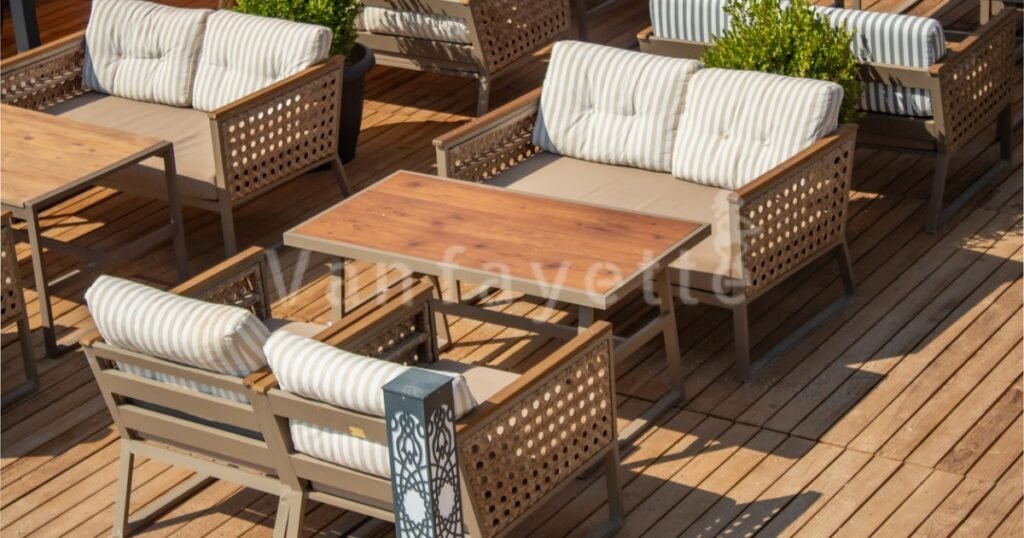
Outdoor dining areas require careful spacing between tables, chairs, and circulation paths. Guests should be able to sit comfortably, pull chairs back easily, and move around the area without disturbing other diners.
Typical guidelines used in hospitality projects include:
Dining chair width
Approximately 20–24 inches (50–60 cm) per chair.
Space required per guest at a table
Approximately 24 inches (60 cm) of table edge.
Distance between tables
Ideally 36–48 inches (90–120 cm) to allow comfortable movement.
Clear walkway behind seated guests
At least 48 inches (120 cm) in high-traffic environments.
These measurements allow restaurant staff and guests to move through the space without creating congestion.
For reference, hospitality design guidelines published by the American Society of Interior Designers emphasize that circulation paths should typically allow at least 36 inches of clear movement space in commercial environments. (https://www.asid.org)
In practical terms, outdoor dining areas should feel open rather than tightly packed.
Poolside Lounge Spacing
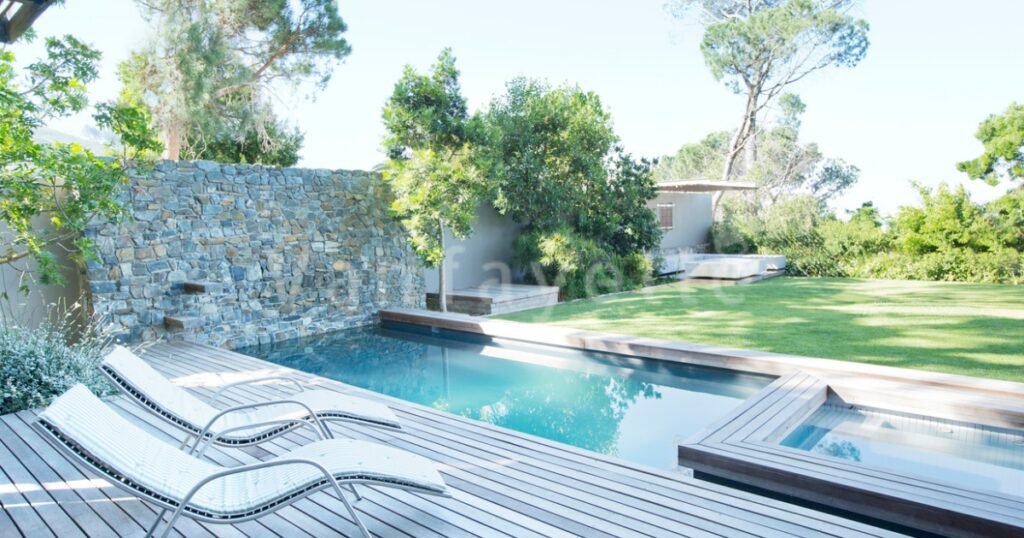
Pool areas usually combine multiple furniture types:
- chaise lounges
- side tables
- umbrellas
- cabanas
- occasional sofas
Incorrect spacing can quickly make these spaces feel crowded.
Typical lounge chair dimensions include:
Chaise lounge width
Approximately 26–30 inches (65–75 cm).
Chaise lounge length
Approximately 78–80 inches (198–203 cm).
Spacing between lounge chairs
At least 20–24 inches (50–60 cm).
Walkway clearance behind lounges
Minimum 48 inches (120 cm).
These dimensions ensure guests can comfortably move between lounge chairs without stepping over bags or towels.
When specifying lounge furniture, designers should also consider cushion thickness and reclining mechanisms, which can change the total footprint of the product.
Cabana Dimensions
Cabanas are typically focal points in hospitality outdoor spaces. They provide privacy, shade, and a premium guest experience.
Because they occupy a larger footprint, proper cabana clearance is essential.
Typical hospitality cabana dimensions include:
Standard cabana footprint
8–10 ft wide
8–10 ft deep
(approximately 240–300 cm square)
Interior daybed size
Often 70–80 inches (178–203 cm) wide.
Space between cabanas
At least 6–8 feet (180–240 cm) to maintain visual privacy and allow service access.
Circulation space in front
Minimum 5–6 feet (150–180 cm).
In many resort projects, cabanas are designed around the furniture itself. Therefore, manufacturers and designers often collaborate during early planning to confirm dimensions and ensure the structure integrates with the seating layout.
This kind of coordination is described in How to Work With CG Outdoor Furniture: From Inquiry to Delivery.
Fire Pit Seating Distance
Fire features have become increasingly popular in hotel outdoor lounges. However, the seating distance around a fire pit is critical for both comfort and safety.
Typical spacing guidelines include:
Distance from fire pit edge to seating
Approximately 36–48 inches (90–120 cm).
Circular seating layout
Allow 7–10 feet (210–300 cm) total diameter for a comfortable conversation zone.
Walkway clearance behind seating
Minimum 36 inches (90 cm).
The goal is to allow guests to enjoy the warmth and atmosphere without feeling too close to the heat source.
Fire pit furniture arrangements are often designed as social gathering zones, so the layout should encourage conversation while maintaining safe distances.
Why Size Planning Matters in Custom Outdoor Furniture Projects
Standard furniture dimensions provide useful starting points, but hospitality projects often require adjustments.
Factors that frequently affect sizing include:
- architectural constraints
- guest capacity requirements
- climate conditions
- service circulation paths
- furniture customization
Because of these variables, many hospitality outdoor environments rely on custom furniture solutions rather than fixed catalog products.
Working with a manufacturer capable of adjusting dimensions, materials, and configurations can significantly improve the final layout. This is why hospitality procurement teams often prioritize manufacturers with proven experience in large-scale projects, as explained in What Makes a Reliable Outdoor Furniture Manufacturer in China.
Final Thoughts
Outdoor hospitality spaces succeed when furniture dimensions, guest comfort, and circulation planning work together.
A well-planned outdoor furniture layout considers more than aesthetics. It integrates ergonomics, spacing, and operational efficiency.
By understanding common dimensions such as:
- lounge chair width
- daybed size
- dining spacing
- cabana clearance
- fire pit seating distance
designers and procurement teams can create outdoor environments that feel spacious, comfortable, and functional for guests.
At the same time, collaboration with experienced manufacturers ensures these dimensions translate into products that perform reliably in real-world hospitality environments.