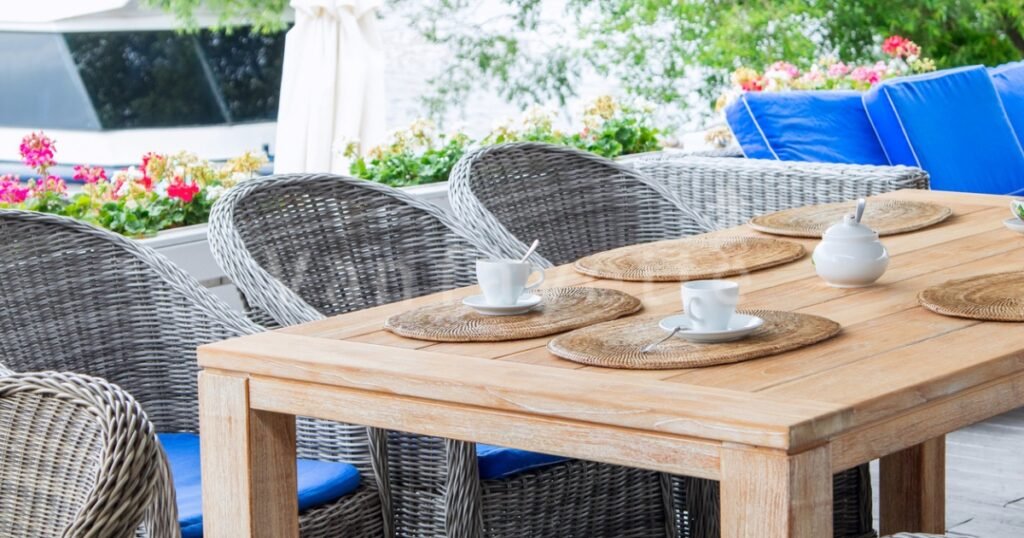
When evaluating rattan outdoor furniture, the real question is rarely whether a piece looks attractive in a catalog. The more important question is whether it has been engineered and built to perform over time.
For designers, hotel buyers, and project teams, this distinction matters. Many products look similar in photos. Yet after one hot summer, one wet season, or one busy hospitality cycle, the difference between surface beauty and true quality becomes obvious.
A reliable manufacturer looks beyond appearance. Good rattan furniture is not defined by “style” alone. It is defined by structure, material grade, weaving consistency, cushion performance, and the manufacturer’s ability to translate a concept into a stable, repeatable product.
That is also why sourcing should not be reduced to finding an identical product online. In most serious projects, the better approach is to find a manufacturer with the capability to develop your version correctly. That idea is closely connected to How to Choose a Reliable Custom Outdoor Furniture Manufacturer for Hospitality Projects and Customization & Capabilitie.
Why rattan outdoor furniture often fails too early
The market is full of products described as wicker, rattan, all-weather rattan, or PE rattan. These terms are often used loosely, which creates confusion for buyers.
In practical terms, early failure usually comes from one of five problems:
- weak internal frame construction
- low-grade synthetic rattan that becomes brittle
- inconsistent weaving tension
- poor finishing at joints and edges
- cushions that are not designed for outdoor exposure
When a buyer focuses only on photos, dimensions, or the lowest quote, these hidden weaknesses are easy to miss. This is similar to the procurement mistake discussed in Why Choosing the Lowest Quote Often Costs Hotels More in the Long Run.
1. Start with the frame, not the weave
The weave is what people notice first, but the frame is what determines whether the furniture remains stable after months or years of use.
A good piece of rattan outdoor furniture should have a frame that feels intentional and proportionate to the product type. A dining chair, lounge chair, sofa, and daybed do not require the same engineering logic. The frame tubing, joint construction, and support points should reflect the product’s actual load and usage.
From a manufacturing point of view, buyers should ask:
- What is the frame material? Aluminum, steel, or another substrate?
- What is the wall thickness?
- Are the welds smooth and structurally sound?
- Are stress points reinforced?
- Is the base designed for hospitality use or only light residential use?
If the frame is weak, even excellent weaving cannot save the product.
For project buyers comparing materials more broadly, this also connects naturally with Most Durable Outdoor Furniture Materials for Commercial Use.
2. Understand the difference between natural rattan and PE rattan furniture
One of the most important distinctions is whether the product uses natural rattan or synthetic PE rattan.
For outdoor use, especially in hospitality or high-exposure environments, PE rattan furniture is generally the practical choice because it is designed for weather resistance. The quality difference, however, still varies enormously from supplier to supplier.
A buyer should not stop at the phrase “PE rattan.” Instead, ask:
- Is the material UV-stabilized?
- Does it keep flexibility over time?
- Is the surface finish too glossy or unnaturally plastic-looking?
- Is the rattan strand thickness suitable for the design?
- Is the color tone consistent across the entire piece?
Sunbrella describes outdoor performance fabrics as UV protective and resistant to fading, stains, mold, and mildew, which reflects the kind of outdoor-performance mindset buyers should also expect from the other materials used in a furniture specification.
A premium-looking weave with low-grade material can still become brittle, crack, or lose visual integrity much faster than expected.
3. Look closely at the weaving quality
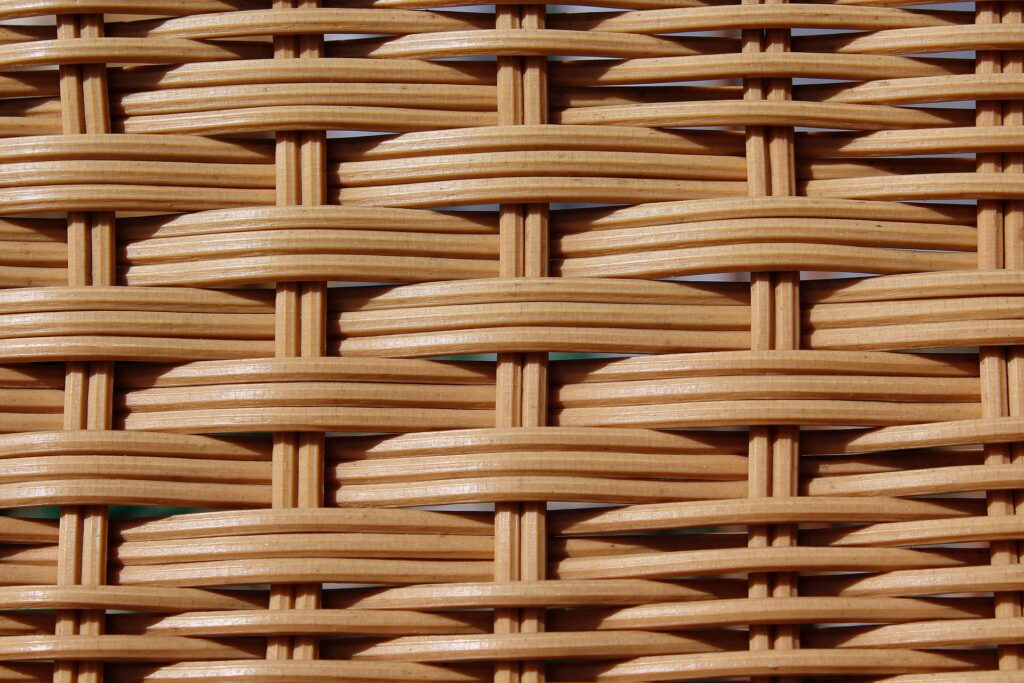
A wicker outdoor furniture set is often judged by silhouette and styling, but weaving quality is where manufacturing discipline becomes visible.
Well-made weaving usually has these characteristics:
- clean and consistent pattern repetition
- balanced tension throughout the surface
- smooth transitions at curves and corners
- tight finishing around legs, arms, and frame intersections
- no loose ends, sharp cut points, or irregular spacing
Poor weaving tends to reveal itself in subtle ways. One side looks tighter than the other. Corners appear forced. Surface lines drift. The weave may look acceptable in a hero photo but weak in close view.
For designers, this matters because weaving quality affects not only durability but also visual calm. In a hospitality project, repeated visual inconsistencies across multiple units can make the entire installation feel cheap.
4. Cushion quality is part of furniture quality
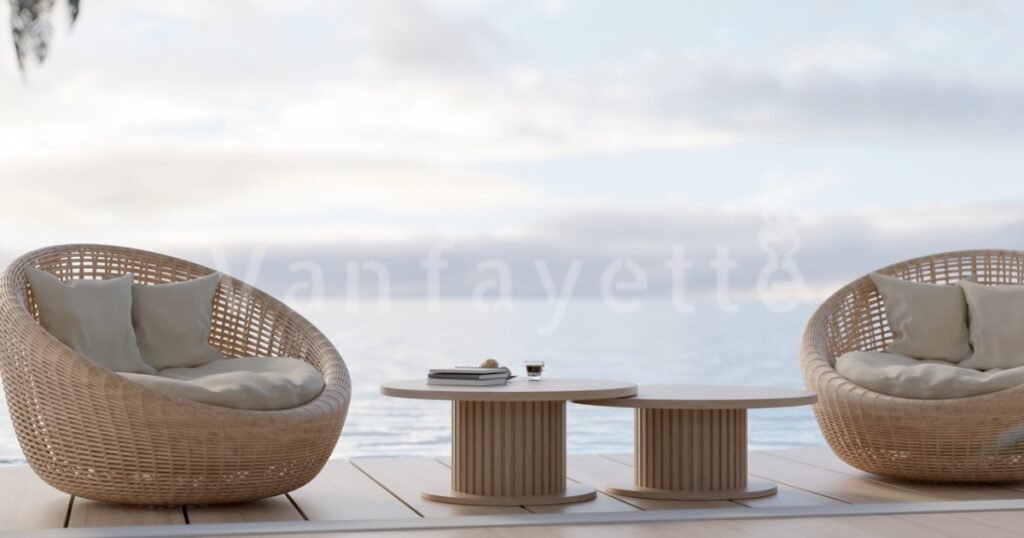
Many buyers separate cushions from the furniture itself. In reality, the cushion system is part of the product’s performance.
An outdoor sofa or lounge chair cannot be considered high quality if the foam collapses quickly, the fabric fades unevenly, or the covers are difficult to maintain.
When reviewing rattan seating, ask:
- Is the foam density appropriate for the application?
- Is quick-dry foam available when the project requires it?
- Are the fabric covers removable?
- Are seams, piping, and zipper placements well executed?
- Is the cushion proportion balanced with the frame?
This point is especially important in poolside, resort, and high-turnover hospitality environments.
5. A good supplier should explain capability, not just price
This is where CG’s voice should be different from generic product sellers.
A capable manufacturer should be able to explain:
- how the structure is built
- why one material is recommended over another
- what can be customized
- which details affect longevity
- which trade-offs affect cost
That is exactly why the supplier conversation matters as much as the product itself.
A serious buyer is not really searching for a factory that already has the exact same chair in stock. They are searching for a manufacturing partner who can understand a concept, interpret project requirements, and build the product correctly.
That logic is already supported by How Custom Outdoor Furniture Works for Hotel & FF&E Projects and What Makes a Reliable Outdoor Furniture Manufacturer in China.
6. Ask about testing, but ask intelligently
Testing is important, but buyers should ask the right questions.
Not every outdoor product follows the same exact standard, and performance requirements vary by product type. ASTM publishes outdoor furniture performance requirements for certain categories such as plastic chairs, multipositional chairs, and chaise lounges, which shows that evaluation should be linked to how a product is actually used rather than reduced to one vague “tested” claim.
A more useful supplier conversation would be:
- What kind of load or stability testing has been considered for this product type?
- Has the frame or structure been reviewed for commercial use?
- What materials are chosen for UV, moisture, or poolside exposure?
- Can the supplier provide third-party testing or related performance documentation where needed?
Testing is not just a certificate to attach at the end. It is part of how a product is designed from the beginning.
7. For project buyers, repeatability matters more than one perfect sample
A single nice sample is not enough. For hospitality and larger custom projects, the real standard is whether the supplier can produce consistency across all units.
That includes:
- consistent color tone
- consistent weave density
- consistent dimensions
- consistent cushion finish
- consistent packaging protection
This is also why project communication matters. A reliable workflow should include specification confirmation, material confirmation, pre-production review, and visual approval before mass production. You already address that process in How to Work With CG Outdoor Furniture: From Inquiry to Delivery.
What quality rattan outdoor furniture really means
In the end, quality is not one feature. It is the result of several things working together:
- the right frame engineering
- the right PE rattan material
- disciplined weaving
- suitable cushion construction
- clear technical communication
- a manufacturer with true customization capability
That is why buyers should evaluate rattan outdoor furniture less like a decorative object and more like a long-term outdoor product system.
The best supplier is not the one with the most attractive photo library. It is the one that can explain how the product is made, where quality risks exist, and how to adapt the product to your project without compromising performance.
For teams sourcing custom hospitality or residential collections, that is often the difference between buying furniture and building a product solution.