

Introduction: The Lowest Price Is Rarely the Lowest Cost
In hotel projects, choosing the lowest quotation for outdoor furniture may look efficient on paper, but in reality it often leads to higher long-term costs. In 2026, experienced hospitality teams increasingly understand that the cheapest option at the purchasing stage can become the most expensive decision over the full project lifecycle.
This article explains why choosing the lowest quote often costs hotels more in the long run, and how procurement teams can avoid hidden risks by evaluating suppliers through performance, coordination, and lifecycle value rather than price alone.
The Difference Between Price and Lifecycle Cost
The core mistake in price-driven sourcing is confusing unit price with total lifecycle cost. While the unit price reflects only the initial purchase, lifecycle cost includes maintenance, replacements, operational disruption, and long-term risk exposure.
Hotels that focus solely on quotations often overlook the downstream impact of material durability, production accuracy, packaging quality, and after-sales support. Over time, these overlooked factors accumulate into costs that far exceed the original savings.
Where Lowest-Quote Decisions Commonly Go Wrong
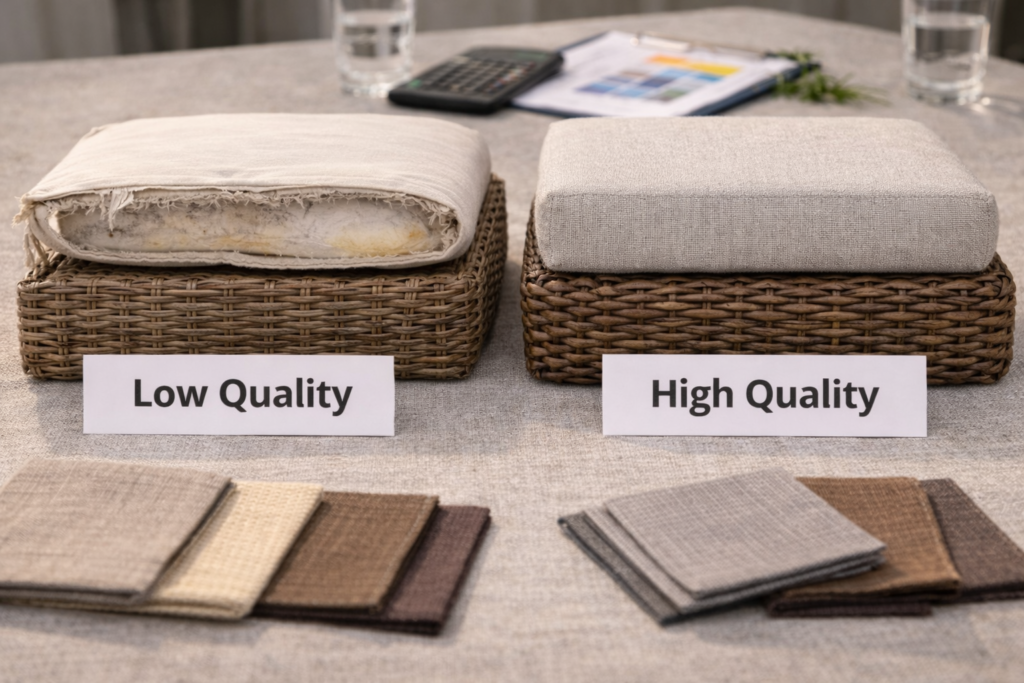
Material Shortcuts and Faster Wear
Suppliers competing primarily on price often reduce cost through lower-grade materials, simplified structures, or thinner finishes. In hospitality environments, this results in faster wear, visible aging, and more frequent replacements.
In contrast, materials such as teak, corrosion-resistant aluminum, UV-resistant PE rattan, and all-weather-use fabric are selected not for appearance alone, but for predictable performance under continuous use.
Inconsistent Production and Quality Variations
Low quotations frequently rely on inconsistent production standards. Without strict quality control and documented inspections, products from the same order may vary in size, finish, or structural stability.
For hotels, even small inconsistencies create visible problems across outdoor spaces and increase the likelihood of complaints, repairs, or partial replacements.
Packaging and Transportation Risks
Packaging is one of the first areas where low-quote suppliers cut costs. Insufficient protection during transportation leads to surface damage, deformation, and higher breakage rates.
These risks are amplified in international shipments, especially when logistics planning is weak. Poor packaging and unclear delivery terms often result in delays, damage claims, and unexpected costs after arrival.
Operational Costs Hotels Rarely Calculate Upfront
Maintenance Labor and Downtime
Furniture that requires frequent tightening, repair, or replacement increases maintenance workload and disrupts daily operations. Over time, labor costs and downtime significantly erode any initial price advantage.
Replacement Cycles and Brand Consistency
Replacing outdoor furniture prematurely creates visual inconsistency across hotel spaces. For branded hospitality groups, this inconsistency affects guest perception and brand standards, adding indirect but real costs.
Why Experienced Hotels Source Beyond Price
Hotels with mature procurement strategies evaluate suppliers based on risk control rather than lowest quotation. This approach aligns closely with the criteria outlined in How Hotels Choose Outdoor Furniture Suppliers in 2026, where long-term performance and coordination capability define supplier value.
These hotels also recognize broader industry trends discussed in Outdoor Furniture Trends 2026 for Hotels & Luxury Residences, where durability, customization, and operational efficiency shape purchasing decisions.
What Hotels Should Evaluate Instead of the Lowest Quote
Rather than asking who offers the cheapest price, hotels benefit from asking different questions:
- Can the supplier clearly explain material choices and expected lifespan?
- Are production processes transparent and quality control documented?
- Is packaging designed for long-distance shipping and on-site handling?
- Does the supplier help plan delivery terms, schedules, and coordination?
Suppliers who provide clear answers and honest guidance often help hotels avoid costly mistakes. This advisory role is further explained in Customization & Capabilities and practical sourcing preparation outlined in How to Work With CG / Inquiry Checklist.
The Long-Term Cost Advantage of the Right Partner
Choosing the right supplier is not about eliminating cost, but about controlling it over time. Suppliers who openly explain what works, what does not, and what is not cost-effective help hotels plan procurement, packaging, and logistics as an integrated process.
This level of coordination reduces surprises, protects schedules, and ensures outdoor furniture remains an asset rather than a recurring expense.
Final Thoughts: Cost Control Is a Long-Term Strategy
The lowest quotation may reduce upfront spending, but it rarely delivers the lowest total cost. In hospitality projects, long-term value comes from durability, consistency, and coordination—not from price alone.
For hotels planning outdoor furniture projects in 2026 and beyond, understanding why choosing the lowest quote often costs more in the long run is essential to protecting both budgets and brand performance.