

Introduction: Packaging Is a Risk-Control System, Not a Final Step
In hotel outdoor furniture projects, packaging is often treated as a finishing task completed after production. In reality, packaging is a core part of risk management that directly affects damage rates, replacement cost, delivery schedules, and overall project success.
In 2026, experienced hospitality procurement teams understand that packaging decisions and container planning must be considered early—at the same level as material selection and delivery terms. This article explains how hotels should evaluate packaging standards, damage risk, and container planning when sourcing outdoor furniture for commercial projects.
Why Packaging Matters More in Hospitality Projects
Hotel outdoor furniture is exposed to multiple risk points during transportation: factory handling, container loading, long-distance shipping, port operations, customs inspection, and final on-site unloading. Each transfer increases the likelihood of damage if packaging is insufficient.
Unlike residential orders, hospitality projects often involve large quantities, tight installation schedules, and uniform appearance requirements. Even minor damage can delay opening timelines or create visual inconsistency across outdoor spaces.
Common Packaging Failures That Lead to Damage
Insufficient Structural Protection
Low-cost packaging often lacks internal reinforcement, corner protection, or load-bearing structure. As a result, furniture frames, woven sections, and cushions are vulnerable to compression and impact during transit.
Over-Compression to Save Space
In an effort to reduce freight volume, some suppliers over-compress furniture or stack items beyond safe limits. While this may reduce container cost, it significantly increases deformation risk and post-delivery quality issues.
Inadequate Moisture and Surface Protection
Outdoor furniture shipments frequently encounter humidity, condensation, and temperature fluctuations. Without proper wrapping and moisture barriers, materials such as fabric, wood, and woven components can suffer staining or degradation.
Packaging Standards Hotels Should Expect
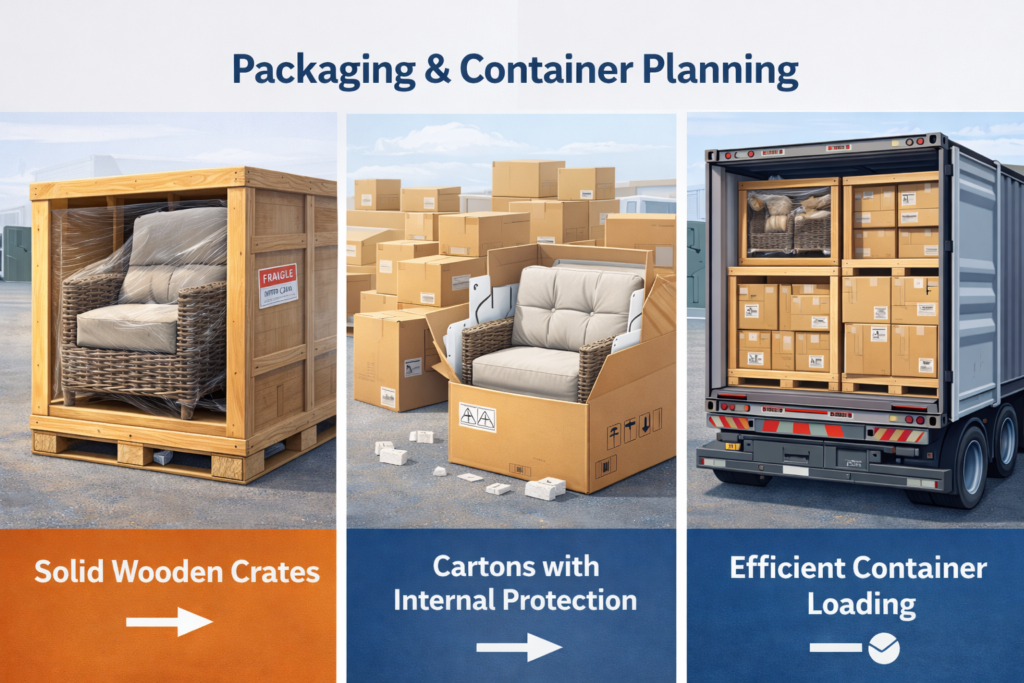
Professional suppliers design packaging based on product structure and transportation stress, not just carton size. Protective standards typically include rigid framing, corner guards, protective films, moisture barriers, and clear handling labels.
For project-based sourcing, packaging planning should also align with delivery terms discussed in FOB, CIF, or DDP: Choosing the Right Delivery Term for Hotel Outdoor Furniture Projects, as responsibility for damage may shift depending on the Incoterm used.
Container Planning as a Cost-Control Tool
Container planning is not simply about maximizing volume utilization. For hotel projects, it is about balancing space efficiency with protection, access, and unloading sequence.
Well-planned container loading reduces shifting during transit, simplifies on-site handling, and minimizes damage risk. This approach supports the long-term cost-control logic explained in Why Choosing the Lowest Quote Often Costs Hotels More in the Long Run.
How Hotels Should Evaluate Supplier Packaging Capability
Hotels benefit from working with suppliers who can clearly explain their packaging logic, provide photos or samples, and adjust packing methods based on project requirements.
This evaluation process is closely related to broader supplier selection criteria discussed in How Hotels Choose Outdoor Furniture Suppliers in 2026, where transparency and coordination capability are critical.
Practical preparation steps for buyers are also outlined in How to Work With CG / Inquiry Checklist.
Final Thoughts: Damage Prevention Starts Before Shipping
Damage during transportation is rarely accidental—it is usually the result of packaging and planning decisions made early in the project.
For hotel outdoor furniture projects in 2026 and beyond, treating packaging and container planning as part of a comprehensive risk-control strategy helps protect budgets, schedules, and brand standards.