
Introduction: Commercial Furniture Is Built for People, Not Occasions
When discussing outdoor furniture materials, many articles focus on describing teak, aluminum, or rattan as isolated material choices. For commercial outdoor furniture, this approach is incomplete.
Commercial furniture is defined not by where it is placed, but by how it is used. Hotels, resorts, clubs, and public spaces expose furniture to continuous guest turnover, long daily usage, weather extremes, frequent cleaning, and repeated repositioning. The real difference between commercial and residential furniture lies in structural strength, material system design, and lifecycle expectations.
This article explains why commercial outdoor furniture requires fundamentally different material standards than residential furniture, and how durability should be evaluated from an engineering and procurement perspective.
Commercial vs Residential Use: The Material System Difference
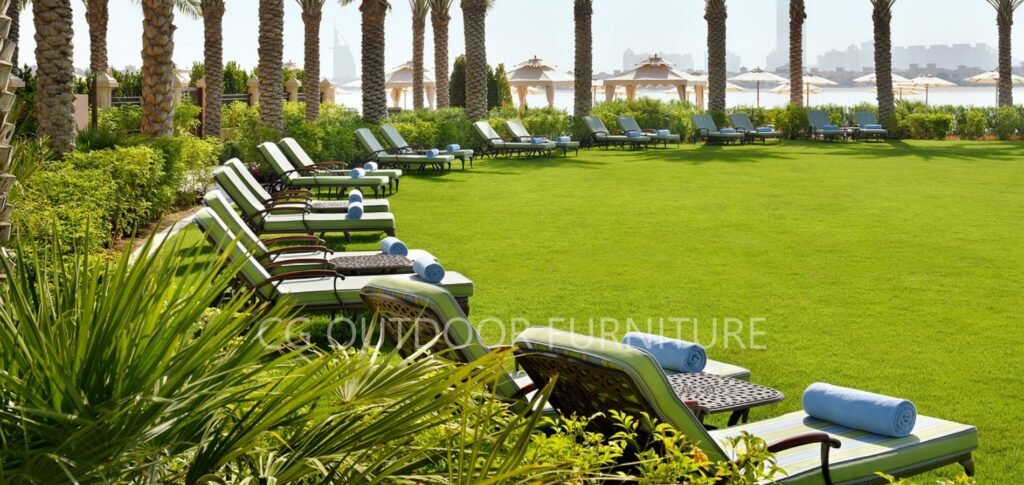
Residential outdoor furniture is typically used by a limited number of people, handled carefully, and replaced based on preference rather than performance failure. In contrast, commercial furniture must safely support many users every day, often without supervision, and remain stable, comfortable, and visually consistent over years of operation.
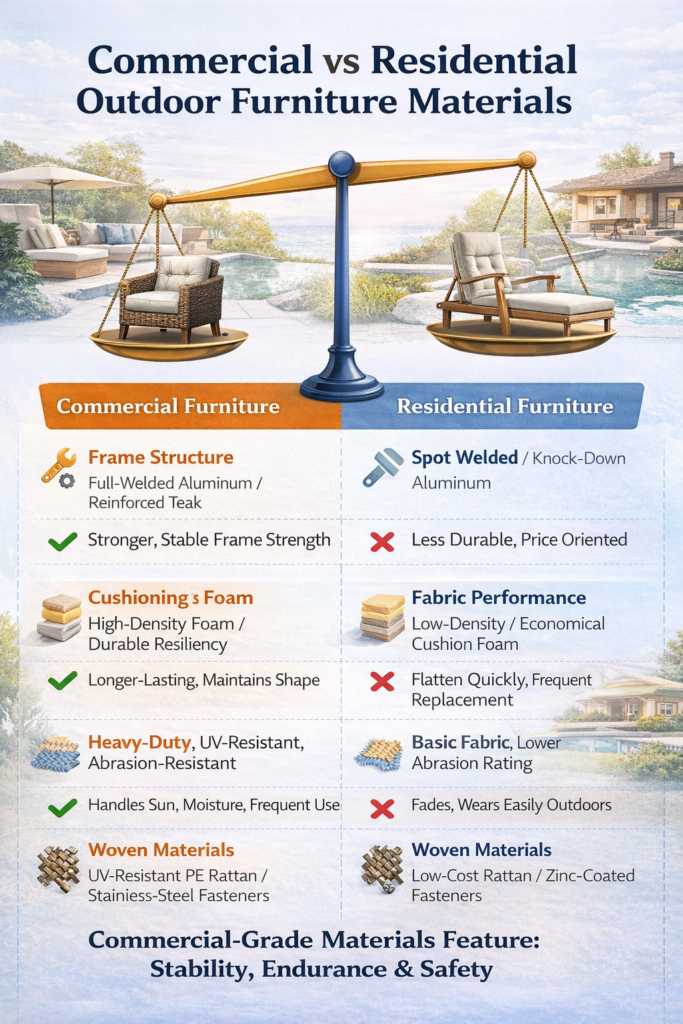
This difference changes material requirements at every level: frame structure, cushioning, fabric performance, and surface finishes. Commercial durability is not about a single material—it is about how the entire material system works together under stress.
Frame Structure: Stability and Load Capacity Come First
For commercial outdoor furniture, the frame is the foundation of safety. Higher guest turnover means higher cumulative load cycles, lateral movement, and uneven weight distribution.
Frames used in commercial settings must offer: – Greater structural rigidity – Higher load-bearing capacity – Resistance to long-term deformation
It is important to clarify that materials such as aluminum and teak are also commonly used in residential furniture. The difference in commercial applications lies not in the material name, but in how the material is engineered and processed. In commercial projects, aluminum frames typically require full welding construction rather than spot welding or knock-down joints, creating a more rigid structure with higher load-bearing stability. Teak frames may also be used for their natural aesthetics, but they must be designed with sufficient cross-sections, reinforced joints, and proper structural detailing to withstand continuous commercial use without warping or loosening over time.
Frame deformation is not only a quality issue—it is a safety risk in commercial spaces.
Cushioning and Foam: Long-Term Compression Resistance
One of the most common failures in low-cost commercial furniture is foam collapse. Residential-grade foam may feel comfortable initially, but under constant daily use, it compresses permanently.
Commercial outdoor furniture requires: – High-resilience foam – Strong compression recovery – Stable internal structure after long-term load
When cushions lose shape, seating comfort declines, water retention increases, and replacement becomes unavoidable. Foam durability directly affects both guest experience and operating cost.
Fabric Performance: UV Resistance, Abrasion, and Fire Safety
Fabric choice is one of the clearest differences between commercial and residential furniture. In commercial environments, fabric must withstand sun exposure, frequent contact, cleaning chemicals, and continuous friction.
Commercial-grade outdoor fabrics are selected for: – Higher UV resistance – Superior abrasion resistance – Color stability under long-term exposure – Compatibility with all-weather use
In some hospitality and public projects, fire-retardant fabric performance is also required in addition to water resistance. These specifications are rarely necessary for residential furniture but are critical for commercial compliance and safety.
Why Residential-Looking Furniture Fails in Commercial Spaces
Furniture designed for residential settings often looks suitable for hotels or public spaces at first glance. However, appearance alone does not reflect whether a product can survive commercial use.
Residential-looking furniture typically relies on lighter frame construction, simplified joints, lower-density foam, and fabrics intended for occasional use. In commercial spaces, these design choices fail under constant load, frequent movement, and continuous exposure to weather and cleaning processes.
As a result, furniture may begin to wobble, deform, lose comfort, or show visible aging within months. What appears to be a cost-saving choice quickly becomes a safety risk, a maintenance burden, and a threat to brand consistency.
This is why furniture that looks appropriate for residential use often fails in commercial environments: it is engineered for appearance and short-term comfort, not for long-term operational stress.
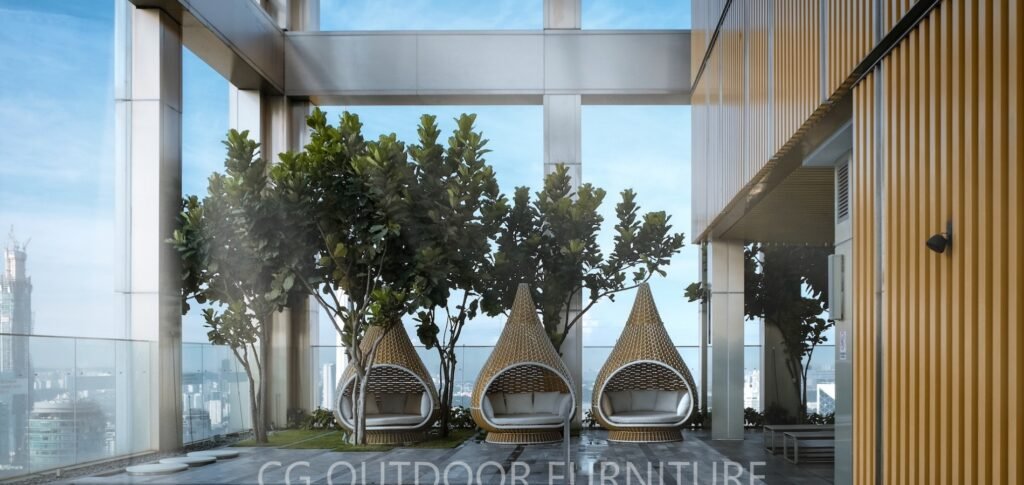
Woven Materials: Why Low-Cost Rattan Fails in Commercial Use
Many commercial projects attempt to reduce initial cost by selecting low-priced woven furniture. In practice, this is where failures appear fastest.
Low-quality rattan becomes brittle under sun and rain exposure, leading to cracking, breakage, and loss of structural support. As woven components fail, furniture becomes unsafe, visually inconsistent, and unsuitable for public use.
This pattern reinforces a common misconception: that commercial furniture is expected to be discarded and replaced frequently. In reality, well-specified commercial furniture can remain in service for many years, especially when combined with appropriate maintenance.
The cost logic behind this issue is explored further in Why Choosing the Lowest Quote Often Costs Hotels More in the Long Run.
Lifecycle Cost: Why Durable Commercial Furniture Is More Economical
Although commercial-grade materials increase upfront cost, they reduce replacement frequency, maintenance workload, and safety risk.
Hotels that repeatedly replace low-cost furniture often underestimate the true cost of disposal, re-purchasing, operational disruption, and brand perception damage. Durable commercial furniture preserves visual consistency and reinforces brand value in guest-facing spaces.
Customization: A Core Requirement in Commercial Projects
Commercial spaces rarely accept standard sizes or finishes. Furniture must align with architectural layouts, circulation paths, and brand identity.
Commercial material selection therefore includes: – Custom dimensions – Fabric color coordination – Material combinations that support design intent
Designers invest significant time sourcing furniture that meets these requirements. This customization process is closely tied to supplier capability, as discussed in How Hotels Choose Outdoor Furniture Suppliers in 2026 and Customization & Capabilities.
Final Thoughts: Commercial Durability Is a System, Not a Material Choice
The most durable outdoor furniture materials for commercial use are not defined by names such as teak or aluminum alone. Durability comes from engineering strength, material compatibility, and lifecycle thinking.
For hotels and commercial spaces, well-designed furniture systems—supported by proper maintenance—offer greater safety, stronger brand value, and lower long-term cost than repeated replacement of low-grade products.