A wicker outdoor furniture set often looks elegant in product photos. Clean weaving, soft cushions, and natural colors can make almost any set appear attractive.
However, many buyers discover a frustrating reality after one season of outdoor use. The weaving begins to loosen. The color fades unevenly. The frame starts to wobble. In some cases, the furniture becomes unusable within a year.
This raises an important question:
Why do some wicker furniture sets last for many years, while others deteriorate so quickly?
The answer usually lies not in the visible design, but in the engineering, materials, and manufacturing discipline behind the product.
For hospitality projects, resorts, and long-term outdoor installations, identifying commercial-grade wicker furniture is essential.
Why Many Wicker Furniture Sets Fail So Quickly
The outdoor furniture market is highly competitive. Many suppliers focus primarily on visual design and cost reduction.
As a result, some products are built with compromises that are not immediately visible:
- thin or weak internal frames
- low-grade synthetic rattan
- inconsistent weaving tension
- poor UV resistance
- cushions not designed for outdoor exposure
When combined with sun, rain, humidity, and daily use, these weaknesses quickly become visible.
This problem is similar to the procurement risk discussed in
Why Choosing the Lowest Quote Often Costs Hotels More in the Long Run.
Low prices often hide structural compromises.
1. The Frame Is the Real Foundation
The most important component of a wicker outdoor furniture set is the internal frame.
The weaving may define the appearance, but the frame determines whether the furniture remains stable over time.
Commercial-grade wicker furniture usually uses aluminum frames, because aluminum provides:
- corrosion resistance
- lightweight strength
- long-term stability in outdoor environments
When evaluating a wicker set, buyers should consider:
- tubing thickness
- weld quality
- reinforcement at stress points
- frame geometry and balance
Weak frames lead to structural movement, which gradually loosens the woven rattan.
This is why professional buyers often evaluate materials and construction first, as discussed in
Most Durable Outdoor Furniture Materials for Commercial Use.
2. PE Rattan Quality Makes a Major Difference
Many people assume that all synthetic rattan is the same. In reality, PE rattan quality varies significantly.
High-quality PE rattan is engineered for outdoor durability and flexibility. Lower-grade versions can become brittle after extended sun exposure.
Important factors include:
- UV stabilization
- material flexibility
- strand thickness
- color consistency
Premium PE rattan should remain flexible rather than becoming rigid or cracking.
Outdoor materials used in furniture must resist fading and environmental stress. According to Sunbrella, outdoor fabrics and materials are typically engineered to resist UV exposure, stains, mold, and mildew in outdoor environments. (https://www.sunbrella.com)
The same performance mindset should apply to the rattan material used in wicker furniture.
3. Weaving Craftsmanship Reveals Manufacturing Discipline
Weaving quality is one of the clearest indicators of a manufacturer’s craftsmanship.
High-quality wicker furniture typically shows:
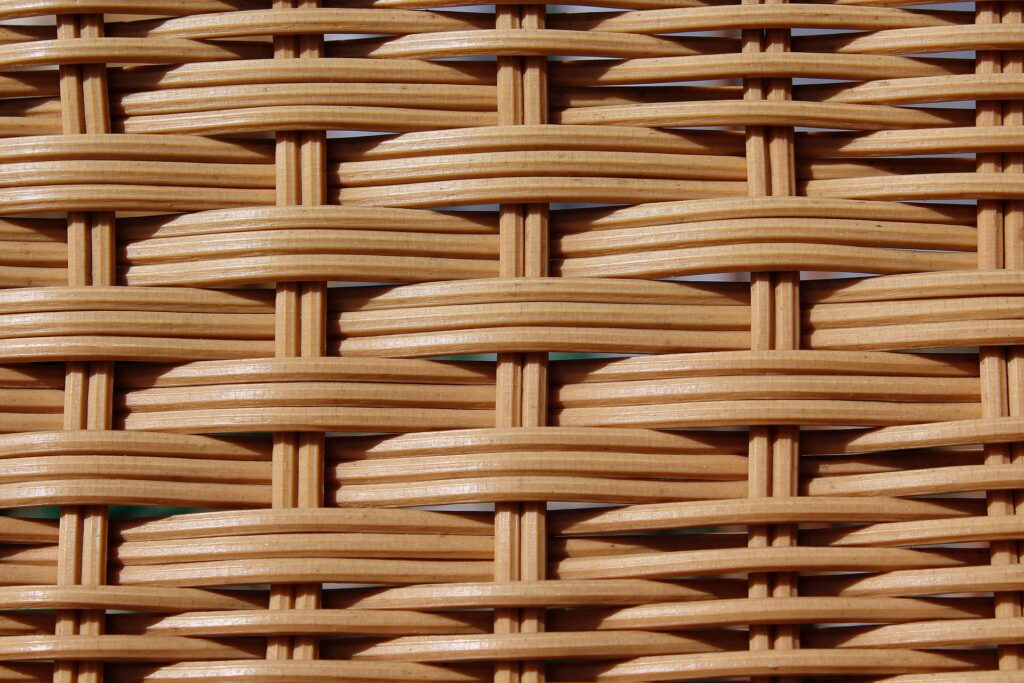
- consistent weaving patterns
- balanced tension across surfaces
- smooth transitions around corners
- clean finishing at frame intersections
Poor weaving often shows subtle signs:
- irregular spacing
- loose strands
- uneven patterns
- visible tension differences
Over time, these small inconsistencies can lead to structural looseness or aesthetic deterioration.
Because wicker furniture is largely handcrafted, weaving consistency reflects the skill and training of the production team.
4. Cushion Construction Is Part of Furniture Quality
Many outdoor wicker sets fail not only because of the structure, but also because of poor cushion systems.
Outdoor cushions should be designed specifically for exterior environments.
Important considerations include:
- foam density
- water drainage capability
- removable covers
- outdoor performance fabrics
Low-density foam quickly collapses and absorbs moisture, leading to discomfort and mold problems.
For hospitality environments, cushion performance is often as important as the frame itself.
5. Manufacturing Capability Matters More Than Catalog Appearance
A common mistake when sourcing outdoor furniture is focusing only on the product photo.
In reality, a reliable supplier should be able to explain:
- how the frame is constructed
- what grade of PE rattan is used
- how weaving quality is controlled
- how cushions are engineered
This is why serious projects often prioritize manufacturing capability rather than catalog products.
In many hospitality and FF&E projects, furniture is customized to match specific layout requirements, materials, and finishes. This process is described in
How Custom Outdoor Furniture Works for Hotel & FF&E Projects.
Finding a supplier capable of executing these adjustments is usually more valuable than finding an identical product online.
6. Commercial Projects Require Consistency
For residential buyers, a single furniture set may be enough.
However, hospitality projects often require dozens or hundreds of units.
Consistency becomes critical.
A commercial-grade manufacturer should be able to maintain:
- identical weaving patterns
- consistent color tones
- stable frame dimensions
- uniform cushion quality
This level of repeatability usually requires structured production processes and experienced manufacturing teams.
That is why procurement teams carefully evaluate supplier capability, as explained in
What Makes a Reliable Outdoor Furniture Manufacturer in China.
A wicker outdoor furniture set should be evaluated as a complete outdoor product system rather than simply a decorative piece.
Long-lasting wicker furniture depends on several elements working together:
- strong aluminum frame construction
- high-quality PE rattan materials
- disciplined weaving craftsmanship
- outdoor-grade cushion systems
- reliable manufacturing processes
When these factors are properly engineered, wicker furniture can perform beautifully for many years in outdoor environments.
For designers and procurement teams working on hospitality or residential projects, understanding these structural differences helps ensure that the final selection is not only visually appealing but also durable, consistent, and suitable for long-term use.