
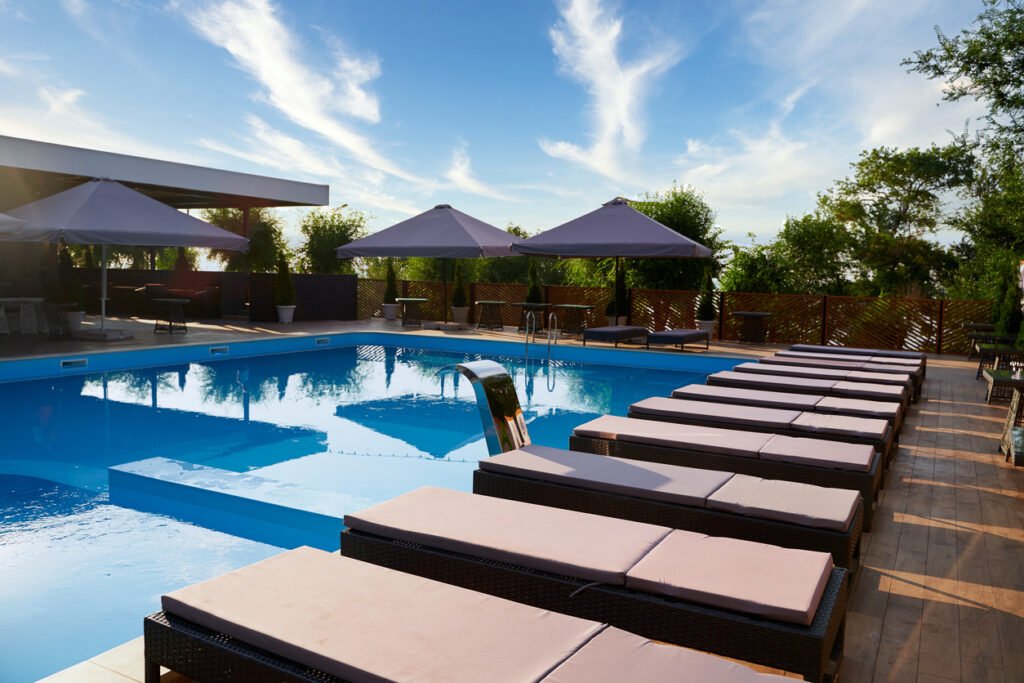
Hidden Costs in Hotel Outdoor Furniture Projects rarely appear in the quotation.
They appear later — in delays, replacements, freight corrections, and strained client relationships.
For procurement managers, FF&E consultants, and project directors, the initial number on a supplier’s quote is only a fraction of the real financial picture.
True cost reveals itself over time.
In hospitality sourcing, clarity is capital.
The Illusion of the “Best Price”
When reviewing multiple bids, it is natural to compare numbers line by line.
But hospitality outdoor projects are not transactional purchases.
They involve:
- Commercial durability
- Multi-item coordination
- International freight
- Installation timelines
- Brand accountability
A lower quotation often excludes invisible variables.
Before approval, procurement teams should understand where costs quietly accumulate.
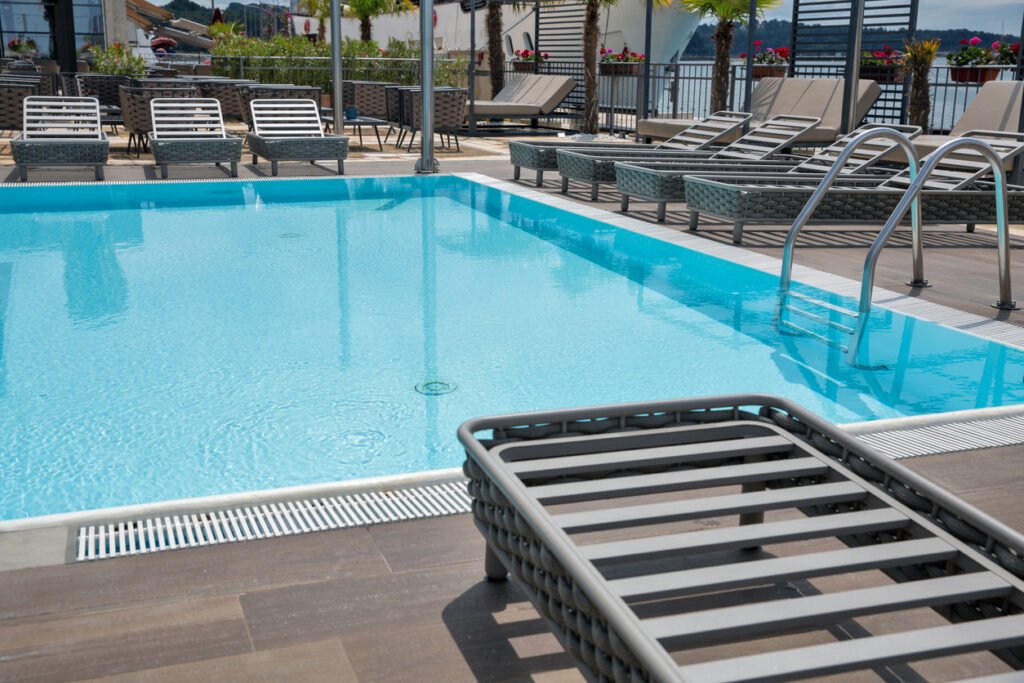
The 7 Hidden Cost Categories Procurement Teams Overlook
1. Specification Gaps
When specifications are loosely defined, production interpretation varies.
Examples include:
- Undefined material grade
- Cushion density not specified
- Finish thickness unclear
- Hardware quality not documented
Small ambiguities scale dramatically across volume.
If procurement teams require a structured pre-order framework, our
Hotel Outdoor Furniture Procurement Checklis
outlines essential specification safeguards.
2. Structural Under-Engineering
Residential-grade construction offered at commercial pricing often looks identical — initially.
Months later:
- Frames weaken
- Weld points crack
- Cushion cores collapse
Replacement costs exceed original savings.
Material durability standards are examined in greater depth in
Most Durable Outdoor Furniture Materials for Commercial Use
3. Production Errors Multiplied at Scale
One minor misinterpretation in a sample becomes eighty identical errors in mass production.
Without structured oversight, correction becomes:
- Re-manufacturing
- Re-shipping
- Re-installation
The real cost is time.
Quality governance strategies are detailed in
Hotel Outdoor Furniture Quality Control
4. Freight & Delivery Misalignment
Many quotations exclude clarity on delivery responsibility.
Unclear Incoterms lead to:
- Unexpected port charges
- Local handling fees
- Customs brokerage confusion
- Storage penalties
Procurement teams must define responsibility boundaries early.
A detailed comparison can be found in
FOB, CIF, or DDP: Choosing the Right Delivery Term for Hotel Outdoor Furniture Projects
For official definitions, consult the
International Chamber of Commerce (ICC) Incoterms Guide
5. Packaging & Transit Damage
Transit damage is one of the most underestimated cost factors.
Improper packaging results in:
- Surface abrasion
- Structural stress
- Moisture damage
- Replacement lead time
Engineered packaging is not decorative — it is protective capital.
Further reading:
Packaging, Damage Risk, and Container Planning for Hotel Outdoor Furniture Projects
6. Delayed Opening Costs
A hospitality project does not operate in isolation.
If furniture delivery is delayed:
- Marketing campaigns pause
- Soft openings shift
- Staff scheduling adjusts
- Revenue generation stalls
The opportunity cost of delay often exceeds material cost differences.
7. Replacement & After-Sales Exposure
Hospitality outdoor furniture lives outdoors.
Without spare parts planning:
- Fabric batches become unavailable
- Finish tones shift over time
- Replacement components mismatch
Future procurement becomes fragmented and costly.
Understanding supplier reliability is fundamental.
We explore evaluation standards in
What Makes a Reliable Outdoor Furniture Manufacturer in China
The True Cost Equation
The initial quotation reflects production cost.
The total project cost reflects:
- Risk exposure
- Process control
- Timeline discipline
- Supplier transparency
- Replacement predictability
Procurement strategy must account for all five.
Why Procurement Teams Choose Stability Over Discounts
Experienced procurement managers understand:
Cost control is not about minimizing price.
It is about minimizing uncertainty.
Stable suppliers provide:
- Clear documentation
- Sample confirmation
- Defined QC systems
- Structured packaging
- Transparent delivery terms
This reduces correction, negotiation, and escalation.
The difference is rarely visible in the first invoice.
It is visible at project completion.
How CG Reduces Hidden Costs
For hospitality projects, CG approaches sourcing as a controlled process:
- Specification alignment before production
- Pre-production sample approval
- Structured internal QC
- Documented pre-shipment inspection
- Engineered packaging strategy
- Clear Incoterm clarification
- Spare parts planning
Our role is not to offer the lowest number.
It is to protect the full financial picture.
Final Reflection
Hidden Costs in Hotel Outdoor Furniture Projects do not originate in bad intent.
They originate in incomplete structure.
When procurement is strategic — not reactive — hospitality sourcing becomes predictable.
In high-value projects, predictability is a competitive advantage.
FAQ
Q1: What are the most common hidden costs in hotel outdoor furniture projects?
Freight misalignment, structural failure, production errors, and replacement delays.
Q2: Why is the lowest quotation risky?
It may exclude durability, quality control, packaging, or freight clarity.
Q3: How can procurement teams reduce risk?
Through clear specifications, documented QC processes, and defined delivery terms.
Q4: Does packaging really impact total project cost?
Yes. Transit damage leads to re-shipping and project delays.
Q5: Should spare parts be included in the initial order?
Yes. It reduces long-term replacement cost and inconsistency.