
Introduction: Delivery Terms Are a Risk Decision, Not a Shipping Detail
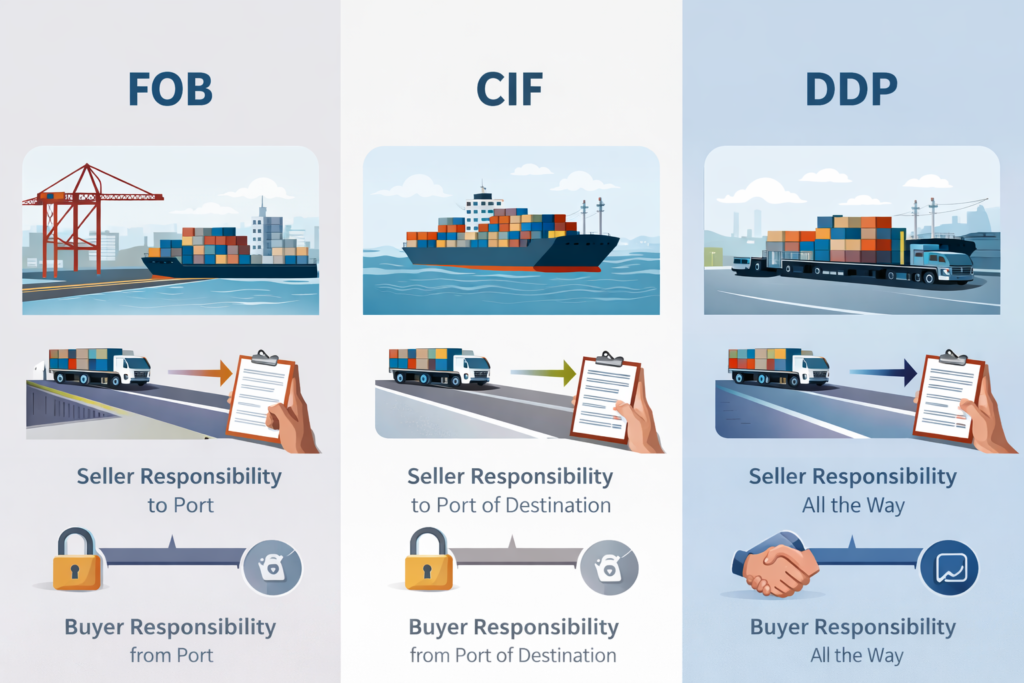
FOB, CIF, and DDP are often discussed as logistics or shipping terms. In reality, choosing between FOB, CIF, and DDP is a risk-management decision, not a transport detail.
In 2026, experienced hotel procurement teams understand that delivery terms determine who controls cost transparency, who absorbs delays or damage, and who is accountable when problems arise. Selecting the right Incoterm directly affects project timelines, coordination efficiency, and total landed cost for hotel outdoor furniture projects.
What FOB, CIF, and DDP Really Mean in Hotel Procurement
Although FOB, CIF, and DDP are standardized international trade terms, their real-world impact in hospitality projects goes far beyond shipping responsibility. Each term shifts risk, visibility, and decision authority between buyer and supplier.
FOB: Cost Transparency with Higher Buyer Responsibility
FOB places control—and risk—largely on the buyer once goods leave the port of origin. Hotels choosing FOB gain full visibility over freight costs and carrier selection, but must actively manage documentation, timelines, and downstream logistics.
CIF: Reduced Coordination with Limited Visibility
CIF simplifies early-stage logistics by bundling freight and insurance, but it often reduces transparency over carrier choice and cost structure. For hotel buyers, CIF trades control for convenience.
DDP: Convenience with Centralized Accountability
DDP concentrates logistics responsibility with the supplier, providing a single point of accountability through final delivery. While this reduces operational burden, it also requires high trust in the supplier’s coordination and compliance capability.
How Hotels Should Choose Between FOB, CIF, and DDP
The right delivery term depends less on price and more on project structure, internal resources, and risk tolerance.
Hotels with strong procurement teams often prefer FOB to maintain control, while smaller operators or first-time international buyers may choose DDP to reduce operational burden.
This decision-making logic aligns closely with supplier evaluation criteria discussed in How Hotels Choose Outdoor Furniture Suppliers in 2026, where coordination capability and transparency matter more than nominal cost savings.
Common Mistakes Hotels Make with Delivery Terms
A common mistake is selecting delivery terms purely to reduce the quoted price. For example, choosing FOB without adequate logistics experience often shifts hidden costs and risks to the buyer.
Another mistake is assuming DDP eliminates risk entirely. In practice, poorly managed DDP arrangements can obscure cost drivers and delay issue resolution if accountability is unclear.
Delivery Terms and Project Coordination
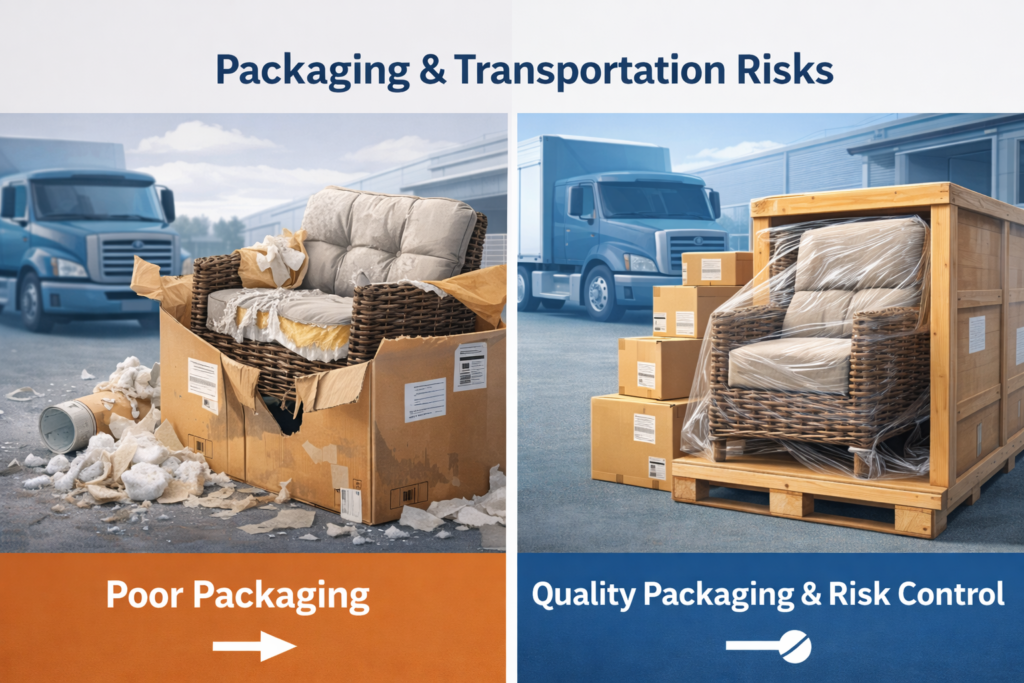
Delivery terms influence not only cost but also communication flow, packaging standards, and problem resolution speed. Suppliers who actively assist buyers in planning packaging, labeling, and delivery sequencing reduce risk regardless of the chosen Incoterm.
This collaborative approach is part of broader project coordination capabilities outlined in Customization & Capabilities and sourcing preparation steps detailed in How to Work With CG / Inquiry Checklist.
Final Thoughts: Choose the Term That Matches Your Risk Profile
There is no universally “best” choice between FOB, CIF, and DDP. The correct delivery term is the one that aligns with a hotel’s internal capabilities, timeline pressure, and risk tolerance.
In 2026, hotels that treat delivery terms as a strategic risk-control tool—rather than a shipping formality—are better positioned to protect budgets, schedules, and long-term project outcomes.